
Business
How to Build and Scale an SEO Agency Without Spending Thousands on Tools

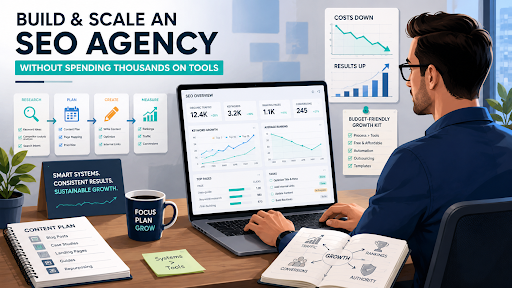
Starting an SEO agency has never been easier. Businesses of every size need help with search rankings, content, local visibility, technical fixes, and lead generation. But building an agency that is profitable and scalable is a different challenge.
Most freelancers and new agency owners quickly learn that SEO work depends on reliable data. You need keyword ideas, competitor insights, backlink information, technical audit reports, content planning tools, and clear client reporting. The problem is that premium SEO subscriptions can become expensive very quickly.
A full SEO software stack can cost hundreds or even thousands of dollars every month. For a new freelancer or small agency, those costs can reduce profit before the business has built a steady client base.
Platforms offering affordable group buy SEO tools can help freelancers and agencies access SEO, marketing, AI, content, and design resources while keeping monthly operating costs under control.
The good news is that successful SEO agencies do not grow because they collect the most tools. They grow because they build smart systems, focus on client goals, deliver measurable results, and use the right resources at the right time.
This guide explains how to build and scale an SEO agency without overspending on software.
Why SEO Agencies Depend on Premium Tools
Modern SEO is data-driven. Clients do not only want general advice. They want to know why rankings dropped, which keywords can bring more leads, what competitors are doing differently, and how SEO work affects revenue.
Whether you work with local businesses, eCommerce stores, SaaS companies, service providers, affiliate websites, or personal brands, your agency needs access to useful information.
Most SEO agencies use tools for:
- Keyword research
- Competitor analysis
- Backlink monitoring
- Technical SEO audits
- Content optimisation
- Rank tracking
- Local SEO checks
- AI-powered content support
- Reporting and dashboards
- Website performance reviews
Without useful data, it is hard to create a strong strategy. You may have good ideas, but clients expect clear reports, real opportunities, and proof of progress.
At the same time, tools should support your work, not control it. A tool can show you a keyword gap, technical problem, or competitor backlink. It cannot decide what will matter most to the client’s business. That part still needs strategy, experience, and clear thinking.
The Biggest Challenge for New SEO Agencies
Most new agency owners face the same issue: high monthly software costs.
A typical SEO stack may include keyword research tools, site audit platforms, content optimisation software, rank trackers, graphic design applications, AI writing assistants, reporting tools, and backlink analysis platforms.
Paying for all of these subscriptions from day one can hurt profit margins. This is especially difficult when you only have a few clients or when you are still testing your service offer.
New agency owners often make one major mistake: they buy every tool recommended by another marketer, YouTube channel, or online course.
But having more software does not always create better results.
A small agency can deliver excellent work with a focused stack if it has:
- A repeatable audit process
- A clear keyword research method
- A content strategy framework
- A technical SEO checklist
- A simple reporting template
- A clear link-building process
- A way to track leads and conversions
The goal is not to own every SEO tool. The goal is to have enough resources to solve the client’s real problems.

Focus on Delivering Results, Not Collecting Tools
SEO clients do not care how many platforms you log into every day. They care about results.
They want more relevant traffic, more leads, more calls, more sales, better local visibility, and stronger brand awareness. Your agency should focus on these outcomes before thinking about extra subscriptions.
Understand Client Goals First
Before running an audit or sending a proposal, understand what the client wants.
Ask questions such as:
- Do they need more website traffic?
- Do they need more local enquiries?
- Are they trying to increase eCommerce sales?
- Do they want to rank for service-related keywords?
- Are they losing visibility to competitors?
- Do they need better conversion rates from existing traffic?
- Do they want more booked calls, form submissions, or phone enquiries?
For example, a local plumber may not need thousands of blog visitors. They may need to rank for service pages in a specific city and get more calls. An eCommerce business may need better category-page SEO, stronger product descriptions, and more organic traffic to commercial pages.
The strategy must match the business goal.
Create Repeatable Processes
The fastest way to scale an SEO agency is to build systems.
You should not create every audit, report, content brief, or client update from scratch. Create templates that can be reused and adjusted for each client.
Useful repeatable processes include:
- Standard SEO audits
- Keyword research templates
- Competitor analysis sheets
- Content brief templates
- Monthly reporting templates
- On-page SEO checklists
- Technical SEO checklists
- Link-building outreach workflows
- New-client onboarding forms
- Monthly client review calls
A strong process saves time, reduces mistakes, and makes it easier to train team members later.

Build an Effective SEO Workflow
A scalable SEO workflow should be simple enough to repeat but detailed enough to produce real value.
1. Keyword Research
Keyword research helps you find the topics your client’s audience is already searching for.
Do not only look for high-volume keywords. Look for terms that have clear search intent and business value.
A good keyword list should include:
- Service keywords
- Product keywords
- Location-based keywords
- Informational blog topics
- Commercial comparison keywords
- Question-based keywords
- Long-tail search terms
- Competitor-related opportunities
For example, a local dental clinic may target terms such as “emergency dentist near me,” “teeth whitening in [city],” or “best dental implants in [city].” A SaaS company may target comparison keywords, solution-based terms, and industry-specific questions.
Keyword research becomes more effective when agencies can review search volume, keyword difficulty, ranking opportunities, and competitor data in one workflow. Using SEO keyword research tools can help teams build content plans around terms that have clear search intent and commercial value.
Keyword research becomes more effective when agencies can review search volume, keyword difficulty, ranking opportunities, and competitor data in one workflow. Using Seo tools group buy can help teams build content plans around terms that have clear search intent and commercial value.
Focus on keywords that support the client’s goals. A keyword with lower search volume but strong purchase intent can often be more valuable than a broad keyword with thousands of searches.
2. Competitor Analysis
Competitor research helps you understand what already works in the search results.
Look at the websites ranking on the first page for your client’s important keywords. Study the pages that consistently appear above your client.
Review:
- Page structure
- Content depth
- Title tags and headings
- Internal links
- Backlink profiles
- Topic coverage
- Search intent match
- Page speed and user experience
- Content format
- Calls to action
The goal is not to copy competitors. The goal is to find gaps.
Maybe competitors have strong blog content but weak service pages. Maybe they rank because of local backlinks. Maybe their pages answer questions your client has ignored. Maybe they have a better internal linking structure.
These insights help you create a smarter SEO strategy instead of guessing.
3. Content Strategy
Strong SEO content is not about publishing random blog posts every week. It should support the client’s services, products, audience questions, and business goals.
Start with a few core topics. Then create related pages around them.
For example, an eCommerce skincare brand may build topic clusters around:
- Skincare routines
- Acne treatment
- Sensitive skin
- Anti-aging products
- Product comparison guides
- Ingredient education
A local law firm may build content around:
- Practice areas
- Local legal questions
- Frequently asked questions
- Case studies
- Service location pages
- Legal guides
Content clusters help websites build stronger topical coverage. They also improve internal linking and make it easier for users to find related information.
A strong content strategy also depends on finding topic gaps, reviewing competitor pages, and matching content with what people are searching for. Agencies can use content optimisation and competitor research tools to plan stronger content clusters and improve their editorial workflow.
A strong content strategy also depends on finding topic gaps, reviewing competitor pages, and matching content with what people are searching for. Agencies can use Seo group buy tools to plan stronger content clusters and improve their editorial workflow.
Every piece of content should have a purpose. It should attract visitors, answer a question, support a service page, build trust, or move users closer to making a decision.
4. Technical SEO
Technical SEO is the foundation of long-term organic growth. Great content may struggle to perform if search engines cannot crawl, understand, or index the website properly.
Regularly audit:
- Website speed
- Mobile usability
- Crawl errors
- Broken links
- Redirect issues
- Indexing problems
- Duplicate content
- Missing metadata
- Internal linking
- Core page experience
- Structured data opportunities
- Sitemap and robots.txt files
Technical issues can reduce visibility even when the website has useful content.
You do not need to fix every small issue at once. Prioritise the problems that affect rankings, indexing, user experience, and conversions.
For example, fixing broken internal links, slow service pages, missing title tags, and indexation problems may have a bigger impact than changing small design details.
5. Performance Tracking
Clients need to see progress. This is why reporting matters.
Track the numbers that connect SEO work to business outcomes:
- Organic traffic
- Keyword rankings
- Leads generated
- Form submissions
- Phone calls
- Sales from organic traffic
- Conversion rates
- Backlink growth
- Technical issue fixes
- Local map visibility
- Top-performing pages
Do not overwhelm clients with hundreds of numbers. Focus on the metrics that matter to them.
For example, a local business owner may care more about calls and form submissions than keyword counts. An eCommerce client may care more about revenue and product-page traffic. A SaaS company may care about demo bookings and qualified organic leads.
Alongside traffic and conversion reporting, agencies should monitor keyword movement, competitor visibility, backlink growth, and technical SEO progress. Platforms with SEO analytics and rank tracking tools can make monthly reporting clearer and help teams identify what needs attention.
Alongside traffic and conversion reporting, agencies should monitor keyword movement, competitor visibility, backlink growth, and technical SEO progress. Platforms with SEO analytics and rank tracking tools can make monthly reporting clearer and help teams identify what needs attention.
Tracking allows agencies to show value, improve campaigns, and retain clients for longer.
Affordable Access to Essential SEO Resources
For freelancers, bloggers, consultants, and growing agencies, access to premium SEO resources at a reasonable cost can make a major difference.
You may need keyword tools for client research, content platforms for planning, design tools for visuals, AI tools for first drafts, and analytics tools for reporting. Buying every subscription separately can become expensive.
Platforms offering affordable group buy SEO tools can help freelancers and agencies access SEO, marketing, AI, content, and design resources while keeping monthly operating costs under control.
Before relying on any platform, review the available tools, account rules, privacy policies, client-data handling practices, and feature limits. Use tools responsibly and avoid uploading sensitive client information unless you are comfortable with how that information is handled.
Cost control matters, but quality matters more. Use affordable resources to improve your workflow, not to replace proper strategy, reporting, or client communication.
How SEO Agencies Can Increase Profit Margins
Lower software costs help, but they are only one part of agency profitability.
Specialise in a Niche
A general SEO agency can work with many types of clients, but a specialist agency often finds it easier to stand out.
You could focus on:
- Local SEO
- eCommerce SEO
- SaaS SEO
- Affiliate SEO
- Real estate SEO
- Healthcare SEO
- Legal SEO
- Home services SEO
- B2B SEO
- Shopify SEO
When you specialise, you understand the client’s audience, common keywords, competitors, and sales process more deeply. This makes proposals easier, delivery faster, and results more consistent.
Specialists can often charge more because they solve specific business problems.
Productize Your Services
Instead of creating a custom offer for every lead, create clear packages.
Examples include:
- SEO Audit Package
- Local SEO Package
- Technical SEO Cleanup Package
- Content Optimisation Package
- Monthly SEO Growth Package
- Link-Building Package
- eCommerce SEO Package
- SEO Content Strategy Package
A productized service makes sales easier because clients understand what they are buying. It also helps your team follow the same delivery process every time.
For example, a local SEO package may include Google Business Profile optimisation, citation checks, service-page improvements, local keyword research, review strategy, and monthly reporting.
Invest in Automation
Automation can save time on repetitive work.
Agencies can automate parts of:
- Monthly reporting
- Keyword tracking
- Client onboarding
- Content briefs
- Competitor monitoring
- Task reminders
- Lead follow-up
- Proposal templates
- Basic content outlines
Automation should not remove the human side of the service. Clients still need strategy, communication, creative thinking, and clear recommendations.
Use automation to save time on repetitive tasks so your team can spend more time on work that improves client results.
Improve Client Retention
Getting a new SEO client usually takes more effort than keeping an existing one.
To retain clients:
- Set clear expectations from the start
- Explain what SEO work is being done each month
- Share simple reports
- Communicate wins and problems honestly
- Connect SEO tasks to business results
- Recommend next steps instead of waiting for clients to ask
- Keep the work organised and consistent
A client may not understand every technical SEO detail. But they will understand that organic traffic increased, leads improved, rankings grew, or important technical errors were fixed.
The Future of SEO Agencies

SEO will continue to change as search behaviour, AI tools, automation, and search engines evolve.
But the fundamentals stay the same:
- Understand search intent
- Create useful content
- Improve user experience
- Fix technical problems
- Build trust and authority
- Track results
- Focus on business outcomes
Agencies that rely only on tools may struggle when those tools change. Agencies with strong systems, clear communication, and good client strategy will be more stable.
The best agencies combine people, processes, and technology. They use tools to work faster, but they do not allow software to replace judgement.
Conclusion
Building a successful SEO agency does not require spending thousands of dollars each month on software subscriptions.
Start with a clear service offer, a repeatable workflow, and a focused set of tools. Learn what your clients actually need. Build content strategies around search intent. Fix technical problems that block growth. Track results that connect to leads, traffic, and revenue.
As your agency grows, improve your systems before adding more complexity. Create templates, automate repetitive tasks, specialise where possible, and keep your software costs under control.
The most successful agency owners understand one simple point: tools support strategy, but they do not replace it. With the right process, even a small SEO team can compete with larger agencies and deliver strong results for clients.

When Does a Tree Need Professional Attention?

Havrenn & Co. Brings the Rich Texture of Suede Back Into Focus

What the Diagnostic Process for Recurrent Pregnancy Loss Involves and Why It Matters to Work with a Specialist

IFRS vs Ind AS 20: Key Differences Every Indian Accountant Should Know

Why Semi-Detached Homes Are Performing Differently Across the Bexley Property Market

Easy Ways to Practice Self Care

6 Ways to Keep Your Car Running When Moneys Tight

Madeira in Autumn: A Slower, Warmer Way to Experience the Island

What You Actually Hand Over When You Book a Trip Online

Exploring the Online Beauty Marketplace
Madeira in Autumn: A Slower, Warmer Way to Experience the Island
Why Semi-Detached Homes Are Performing Differently Across the Bexley Property Market
Easy Ways to Practice Self Care
IFRS vs Ind AS 20: Key Differences Every Indian Accountant Should Know
What the Diagnostic Process for Recurrent Pregnancy Loss Involves and Why It Matters to Work with a Specialist
Havrenn & Co. Brings the Rich Texture of Suede Back Into Focus
6 Ways to Keep Your Car Running When Moneys Tight
When Does a Tree Need Professional Attention?
When Does a Tree Need Professional Attention?
Havrenn & Co. Brings the Rich Texture of Suede Back Into Focus
What the Diagnostic Process for Recurrent Pregnancy Loss Involves and Why It Matters to Work with a Specialist
IFRS vs Ind AS 20: Key Differences Every Indian Accountant Should Know
Why Semi-Detached Homes Are Performing Differently Across the Bexley Property Market
Easy Ways to Practice Self Care
6 Ways to Keep Your Car Running When Moneys Tight
Madeira in Autumn: A Slower, Warmer Way to Experience the Island
What You Actually Hand Over When You Book a Trip Online
Exploring the Online Beauty Marketplace
-

 Biography7 months ago
The Emotional Journey of Joanne Schieble Simpson, Steve Jobs’ Biological Mother
-

 News7 months ago
Jamal Adeen Thomas – Everything You Should Know About Clarence Thomas’ Son
-
 Blog4 months ago
What Is Sotwe? Everything You Need to Know Before Using It
-

 Biography7 months ago
Meet Theo Ressler: Everything You Know About Jami Gertz’s son