
Business
When Your Furnace Fails, Fast Help Makes All the Difference

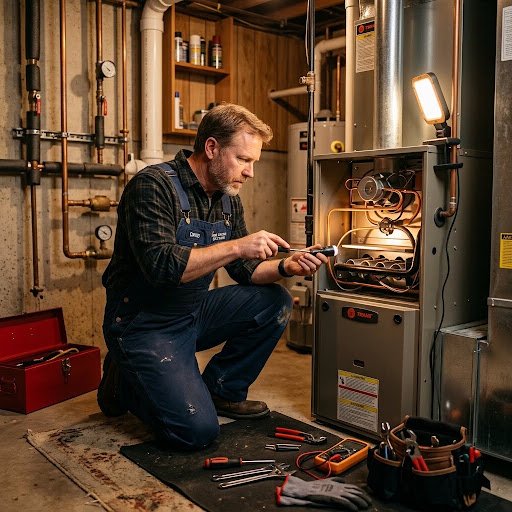
Few things throw off a household faster than a furnace that stops working in the middle of winter. The temperature drops, the pipes become a concern, and everyone in the home feels it. At Complete Temperature Services, we know that furnace problems rarely happen at a convenient time—and that’s exactly why we’re built to respond when it matters most.
This post covers what to expect when you call in a professional, why timely furnace repair pays off, and how the right service team can get your home back to warm and comfortable without the stress.
What Does a Professional Furnace Inspection Actually Cover?
When a technician arrives at your home, the job goes well beyond a quick glance at the unit. A thorough inspection touches every critical component—the heat exchanger, igniter, blower motor, flue, and thermostat connection. Each part plays a specific role, and a failure in one often puts pressure on the others.
Technicians also run combustion efficiency tests and check for carbon monoxide risks. These aren’t optional extras—they’re standard steps in a professional furnace visit that protect both your system and your family.
Why Strange Sounds and Smells Should Never Be Ignored
A banging sound when the furnace kicks on often points to delayed ignition, where gas builds up before it finally lights. A burning or metallic smell could signal a failing motor or electrical issue. These aren’t quirks to get used to—they’re early warnings that something inside the system needs attention.
Acting quickly on these signs typically means a simpler, more affordable fix. Waiting often turns a minor repair into a full component replacement.
Common Furnace Problems That Require Professional Attention
Some issues are textbook, and a skilled technician will recognize them immediately:
- Cracked heat exchanger: One of the more serious problems, as it can allow combustion gases to mix with circulated air. This requires immediate professional assessment.
- Faulty igniter or flame sensor: These components fail over time and cause the furnace to short-cycle or refuse to start altogether.
- Clogged or dirty burners: Reduced airflow leads to uneven heating and increased fuel consumption.
- Worn blower motor: When the blower struggles, rooms farther from the furnace feel noticeably colder.
- Thermostat miscommunication: Sometimes the furnace itself is fine—the issue is a miscalibrated or malfunctioning thermostat sending the wrong signals.
Each of these problems has a clear solution in the hands of a trained technician. The key is getting a proper diagnosis before assuming the worst.
Why Choosing the Right Repair Service Changes Everything
Not all furnace repair services operate the same way. Response time, technician experience, and the quality of replacement parts all vary significantly—and those differences show up in the results.
What Sets Complete Temperature Services Apart
Complete Temperature Services has built its reputation on showing up prepared, working efficiently, and standing behind every repair. Technicians arrive with the tools and parts most commonly needed for furnace calls, which means fewer delays and faster resolutions for homeowners.
The team handles a wide range of furnace makes and models, including gas, electric, and oil-fired systems. Whether the furnace is a decade old or recently installed, the diagnostic process is thorough and the repair approach is precise.
Transparent communication is also a core part of how the company operates. Before any work begins, customers receive a clear explanation of what’s wrong, what it will take to fix it, and what the cost will be. No surprises, no pressure—just honest service.
The Real Cost of Delaying Furnace Repairs
Furnace repair completed promptly by a certified technician not only restores warmth to your home but also protects your heating system from deeper mechanical damage that can dramatically shorten its lifespan and drive up energy bills over time.
A furnace running with a fault doesn’t just heat poorly—it works harder to compensate. That extra strain accelerates wear on components that were otherwise in good condition. Energy bills climb. The system becomes less reliable. And what started as a straightforward repair can evolve into a full system replacement if left long enough.
Repairs done right the first time, by technicians who know the system inside and out, prevent that cascade of problems from ever starting.
Maintaining Your Furnace Between Service Visits
Professional repairs are only part of the equation. A few consistent habits between visits help keep the furnace running well:
- Replace air filters every 1–3 months, depending on usage and home conditions
- Keep vents and registers clear of furniture and obstructions
- Schedule an annual inspection before the heating season begins
- Listen for changes in how the system sounds or performs and report them early
These steps don’t require technical knowledge—just consistency. And they make a real difference in how long a furnace performs reliably.
Your Home Deserves Reliable Heat—Complete Temperature Services Delivers It
A broken furnace is stressful, but it doesn’t have to stay that way for long. Complete Temperature Services brings the expertise, equipment, and commitment to quality that homeowners need when the heat goes out. Fast response times, honest assessments, and skilled repairs—every time.
If your furnace is showing signs of trouble or simply hasn’t been inspected in a while, now is the right time to reach out. The team is ready to help restore comfort to your home and confidence in your heating system.
Contact Complete Temperature Services today and get your furnace back to working exactly as it should.

CFA Course Duration vs Career Advancement: Long-Term Perspective

When Your AC Breaks Down, Every Hour Counts

Why Power Washing Is the Best Thing You Can Do for Your Property This Season

When Your Furnace Fails, Fast Help Makes All the Difference

When Your Toilet Breaks, You Need More Than a Quick Fix

Beyond the Thermal Baths: A Surprising Reason to Visit Hungary

How to Create the Perfect Gift Box: Tips, Ideas & Inspiration

How the Best Chronic Care Management Software Supports Care Coordination?

How to Prepare Your Business for HubSpot Migration Services

Why Tankless Water Heaters Are the Upgrade Your Home Deserves

Best Video Doorbell Without Subscription Storage Guide

How to Build and Scale an SEO Agency Without Spending Thousands on Tools

How Dissertation Writer AI Assists Students From Topic Selection to Completed Dissertation

The Worst Truck Accidents in U.S. History and What They Changed About Road Safety

Why Renting a Private Home Near an Active Volcano Is Safer Than You Think

Why Posters Still Matter in a Fast-Scrolling Digital World

Men’s Western Shirts Ideas: 3 Styling Formulas for a Cool Summer

MacBook Air Computer Charger: Features, Performance, and Computer Charger MacBook Compatibility Guide

When Connectivity Counts, Telecommunications Contractors Deliver

Desktop Essentials: Why Custom Printed Notepads Never Go Out of Style
CFA Course Duration vs Career Advancement: Long-Term Perspective
When Your AC Breaks Down, Every Hour Counts
Why Power Washing Is the Best Thing You Can Do for Your Property This Season
When Your Furnace Fails, Fast Help Makes All the Difference
When Your Toilet Breaks, You Need More Than a Quick Fix
Beyond the Thermal Baths: A Surprising Reason to Visit Hungary
How to Create the Perfect Gift Box: Tips, Ideas & Inspiration
How the Best Chronic Care Management Software Supports Care Coordination?
How to Prepare Your Business for HubSpot Migration Services
Why Tankless Water Heaters Are the Upgrade Your Home Deserves
-

 Biography5 months ago
The Emotional Journey of Joanne Schieble Simpson, Steve Jobs’ Biological Mother
-

 News4 months ago
Jamal Adeen Thomas – Everything You Should Know About Clarence Thomas’ Son
-

 Biography5 months ago
Meet Theo Ressler: Everything You Know About Jami Gertz’s son
-

 Blog1 month ago
What Is Sotwe? Everything You Need to Know Before Using It