Have you ever noticed that the same company can appear in different ways across different systems? One person may write “Apple,” another may write “APPLE,” and someone else may enter “Apple Inc.” Even though they all mean the same company, many systems treat them as different records. This small issue can create much bigger problems than most people realize.
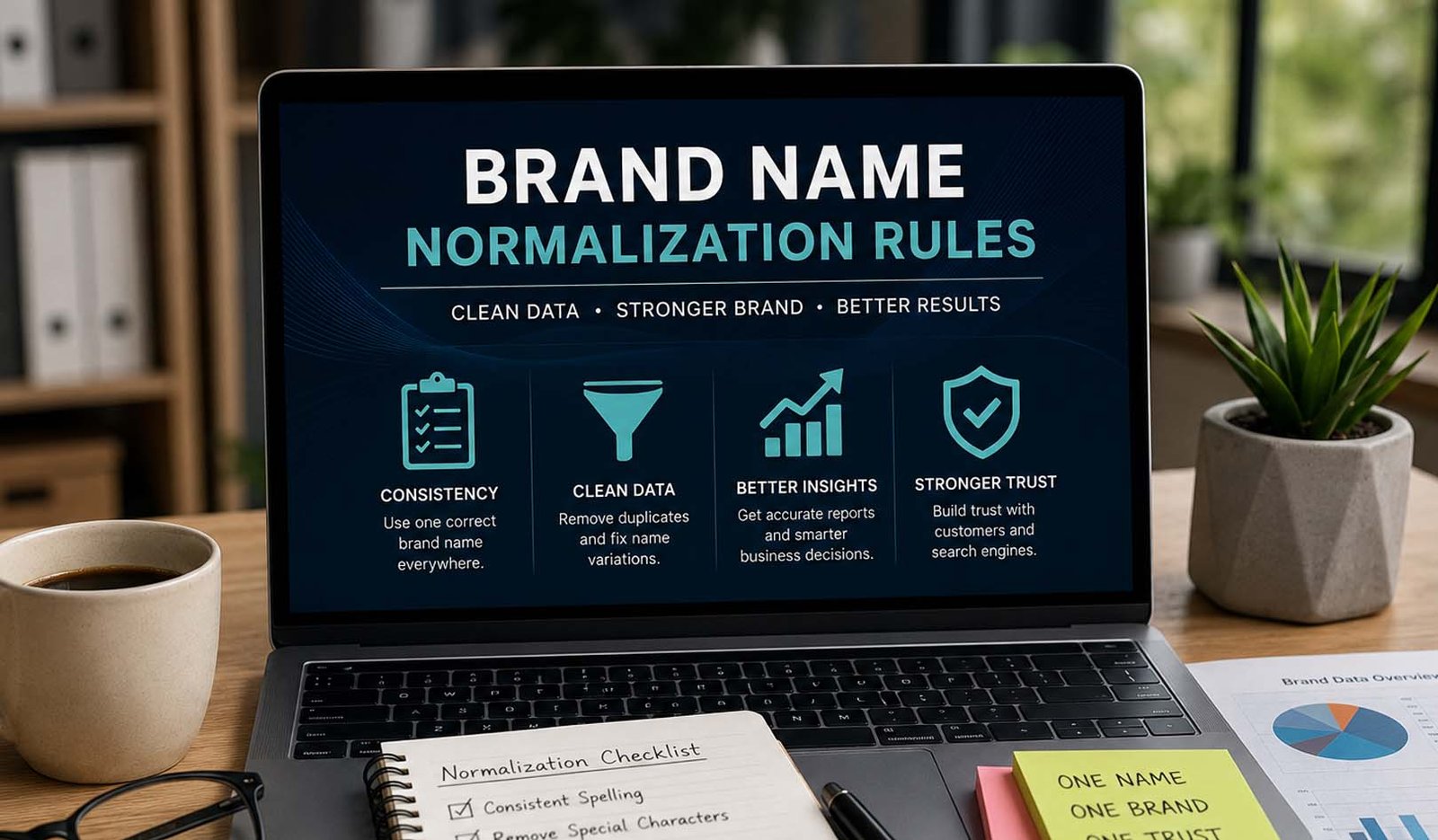
This is where brand name normalization rules become important. These rules help businesses use one standard version of a brand name everywhere. It may sound like a small task, but it can make a huge difference in data quality, customer experience, reporting, and business growth.
Many companies spend thousands of dollars on marketing, software, and business tools. Yet they often overlook simple naming problems inside their systems. When brand names are not consistent, reports become messy, customer records become confusing, and teams waste time trying to fix errors.
The good news is that these problems are avoidable. With the right brand name normalization rules, businesses can keep their data clean, improve teamwork, and build stronger trust with customers. In this guide, you will learn what brand name normalization means, why it matters, and how businesses can do it the right way.
What Are Brand Name Normalization Rules?
Brand name normalization rules are simple guidelines used to make sure a brand name looks the same everywhere. The goal is to take different versions of a brand name and turn them into one approved version that everyone uses. This helps create clean and reliable data across all systems.
For example, imagine a database that contains “Nike,” “NIKE,” “Nike Inc.,” and “nike.” A computer may see these as four different entries. However, a person knows they all refer to the same brand. Normalization helps systems understand this by using one standard version.
Many businesses call this approved version the “canonical name.” This simply means the official version of the brand name. Once a canonical name is chosen, every variation is connected to that standard version. This makes records easier to manage and understand.
Brand name normalization is not about changing a company’s public identity. A company can still use a special logo or creative design. The purpose is to keep business data organized behind the scenes where important decisions are made.
Why Clean Brand Names Matter
Clean brand names help businesses work better every day. When names are consistent, teams can quickly find the information they need. Reports become more accurate, and managers can make better decisions based on reliable data.
Think about a sales team looking at customer records. If one customer appears under three different names, the team may not see the full history of that customer. This can lead to missed opportunities and poor customer service. A clean naming system helps avoid these issues.
Brand name normalization rules also help reduce duplicate records. Instead of having several entries for the same company, everything stays together in one place. This saves time and prevents confusion across departments.
Customers notice consistency too. When they see the same brand name on websites, emails, invoices, and social media pages, the business looks professional and trustworthy. Small details like this help build confidence over time.
Common Brand Name Problems
One of the biggest challenges businesses face is simple spelling and formatting differences. People enter data in different ways, and systems often collect information from many sources. Over time, these small differences create a large amount of messy data.
Capital letters are a common example. A brand may appear as “Apple,” “APPLE,” or “apple.” To people, these look similar. To many systems, they can become separate records. This causes problems when businesses try to analyze information later.
Punctuation creates another challenge. Names such as “H&M,” “H & M,” and “H and M” may all exist in the same database. Without clear brand name normalization rules, these records can become scattered across different reports and systems.
Extra spaces, typing mistakes, and short forms also create confusion. A user may enter “Intl” while another enters “International.” Small differences like these seem harmless, but they often lead to duplicate records and inaccurate data.
Business changes can create even more problems. Companies merge, rebrand, or launch new divisions. Old names and new names may exist together for years. Without a clear plan, data becomes harder to manage as time passes.
Regional differences can also play a role. A brand may be written slightly differently in different countries or languages. Businesses that operate globally often face additional challenges when trying to keep naming consistent everywhere.
How Brand Name Normalization Works
The process usually starts by finding all the different versions of a brand name. This step is called identification. Businesses review their systems and look for spelling differences, formatting issues, and duplicate records.
After that comes cleaning. During this stage, extra spaces, unnecessary symbols, and other unwanted items are removed. The goal is to make the data easier to work with before applying standard rules.
The next step is standardization. This is where businesses choose one official version of a brand name. Every variation is connected to that approved version. This creates consistency across databases, CRM systems, product catalogs, and reporting tools.
The final step is deduplication. Duplicate records are combined into one clean record. This helps prevent confusion and makes data much easier to manage. When all four steps work together, businesses gain cleaner and more reliable information.
Many successful companies build these steps directly into their systems. Instead of waiting for problems to appear, they normalize new data as soon as it enters the database. This saves time and reduces future cleanup work.
Important Brand Name Normalization Rules
The first and most important rule is choosing one official brand name. Every business should decide which version is correct and use it everywhere. This becomes the main reference point for all future data.
The second rule is keeping capitalization consistent. If the approved version is “Nike,” then every system should use “Nike.” Using different styles such as “NIKE” or “nike” creates unnecessary differences that can affect reporting.
Another important rule is handling legal suffixes carefully. Many businesses remove words such as “Inc.,” “LLC,” “Ltd.,” or “Corp.” because they often add little value to everyday operations. For example, “Nike Inc.” may simply become “Nike.”
Businesses should also create clear rules for punctuation and special characters. Names such as “AT&T” or “Coca-Cola” may require special handling because punctuation is part of the brand identity. A good normalization process knows when to keep these characters and when to remove them.
Spacing should be standardized as well. Extra spaces before, after, or inside a brand name can create unexpected issues. Cleaning and standardizing spacing helps keep records accurate and easy to search.
To make the process even stronger, many companies build a master list of brand name variations. This list connects different versions of a name to one approved version. As new variations appear, they can be added to the list and managed more easily.
Brand Name vs Legal Name
Many people think a brand name and a legal name are the same thing. In reality, they often serve different purposes. Understanding this difference is an important part of effective brand name normalization rules.
A brand name is the name customers recognize. It appears in marketing, advertising, websites, and social media. A legal name is the official business name used in contracts, taxes, and legal documents.
For example, customers may know a company as “Google.” However, legal documents may use “Google LLC.” Both names are correct, but they serve different purposes. Mixing them together can create confusion.
Many businesses solve this problem by storing brand names and legal names in separate fields. This allows marketing teams, sales teams, and legal teams to use the correct information without affecting each other.
Keeping these names separate also improves reporting and data management. It allows businesses to maintain consistency while still meeting legal and compliance needs.
Why Duplicate Brand Names Hurt Business
Duplicate brand names may seem like a small issue at first. However, they can create serious problems over time. When the same company appears under different names, teams often struggle to see the complete picture.
Sales teams may accidentally contact existing customers as if they were new leads. Marketing teams may send the wrong messages because customer information is spread across multiple records. These mistakes can damage customer relationships.
Duplicate records also affect reports and business decisions. Revenue may be split across several entries instead of appearing under one company. This makes it harder for leaders to understand what is really happening inside the business.
Many organizations discover that a large portion of their data contains duplicate records. Fixing these issues improves accuracy, saves time, and helps teams work more effectively together.
The next part of this guide will explore how brand name normalization affects SEO, the best tools businesses use, common mistakes to avoid, real-world examples, and the best practices that help companies keep their data clean and organized.
Brand Name Normalization and SEO
Brand name normalization rules do not only help inside a company. They also help the way people find a business online. When a brand name is written the same way on a website, social pages, business listings, and online stores, search engines can understand it better.
Google tries to understand brands as real things, not just words on a page. If one business is listed as “Acme Studio,” “Acme Studios,” and “Acme Creative,” Google may not be fully sure if they are the same brand. This can weaken the brand’s online trust.
This matters even more for local SEO. Local SEO depends a lot on NAP, which means name, address, and phone number. If a business name is different across Google Business Profile, maps, directories, and review sites, local search results can become weaker.
A simple fix is to use one clear brand name everywhere. The same name should appear on the website, social profiles, press pages, email footers, product pages, and business listings. This makes the brand easier for both people and search engines to trust.
Best Tools for Brand Name Normalization
Small businesses do not always need costly tools to start. A simple spreadsheet can help at the beginning. The team can list all brand name versions in one column and add the correct standard name in another column.
For bigger data, tools can save a lot of time. CRM tools, data cleaning tools, and product data tools can help find repeated names, spelling issues, and wrong formats. This is useful when a business has hundreds or thousands of records.
Some teams use fuzzy matching tools. These tools find names that look close to each other, like “Amazon,” “Amazn,” and “Amazon Inc.” But they should be used with care. They should flag possible matches for review, not merge everything by themselves.
Larger companies may use tools like Talend, Informatica, AWS Glue, Google Cloud Dataflow, FuzzyWuzzy, Cleanco, MonkeyLearn, or AI tools. These tools can help with data cleaning, name matching, and brand data standardization at a bigger scale.
Big Mistakes to Avoid
One big mistake is having no written rules. If every team chooses names in its own way, the data will become messy again. A simple rulebook can stop this. It should explain how to write names, remove suffixes, fix spaces, and handle special cases.
Another mistake is treating cleanup as a one-time job. Brand name data changes all the time. New customers, new vendors, new products, and new imports can bring fresh errors. This is why brand name normalization rules should be part of daily data work.
Some businesses remove too much detail. This can hurt names like “H&M,” “3M,” “AT&T,” or “monday.com.” These details are part of the real brand name. Good rules should clean names without breaking their true meaning.
Relying only on manual work is also risky. People can miss small errors, especially in large files. Automation can help, but human review is still useful for special cases. The best setup uses both tools and careful review.
Real Examples That Show the Value
Akumin is a good example from healthcare. After bringing many brands together, it had different email signatures across the company. By making the signatures more standard, the business created a cleaner and more trusted brand look.
Amy’s Kitchen also faced problems with product and brand names across retailer systems. When names were cleaned and matched better, reports became more accurate. This helped the company understand product data and marketing results more clearly.
Fuji Sports faced a different issue on Amazon. Many products were wrongly linked to the wrong brand name. This created confusion for buyers. After fixing the records, the brand listings became more accurate and easier to trust.
A small agency example also shows the same problem. One client was listed as “Riverside Retail,” “Riverside Retail Group LLC,” and “RRG.” A new team member missed key details because the client history was split. One clear name fixed the issue.
Best Tips to Follow
The best place to start is with a simple audit. Export company names from your CRM, store, product list, or sales system. Then look for names that seem similar. You may find many small issues that were hiding in plain sight.
Next, create a master name list. This list should show each wrong or different version and the correct name beside it. For example, “Microsoft Corp,” “MSFT,” and “microsoft” can all point to “Microsoft.”
It is also smart to clean names before they enter the system. This means using clear forms, import rules, CRM checks, and team guides. If bad data never enters the system, there will be less cleanup later.
Lastly, give one person or team ownership of the rules. This person can update the list, check new changes, and make sure everyone follows the same process. Brand name normalization works best when someone keeps it alive.
Final Thoughts
Brand name normalization rules may sound like a small topic, but they can make a big difference. They help businesses keep data clean, reports clear, and customer records easy to understand.
When brand names are messy, teams waste time. Sales, marketing, support, and finance can all face problems. One wrong name can split records, hide useful history, and create poor customer experiences.
The good news is that fixing this does not have to be hard. Start with one clear brand name, remove simple errors, build a master list, and make sure the team follows the same rules.
In 2026, clean data is more important than ever. Businesses use many tools, systems, and online platforms. Brand name normalization rules help all these systems work together in a smarter and cleaner way.
(FAQs)
What are brand name normalization rules?
Brand name normalization rules are simple rules that make one brand name appear the same way everywhere. They help clean data, remove duplicates, and make reports more correct.
Why do brand names need to be normalized?
Brand names need to be normalized because the same name can be written in many ways. Without rules, systems may treat one brand as many different records.
Do brand name normalization rules help SEO?
Yes, they can help SEO. When a brand name is consistent across websites, social pages, and listings, search engines can understand the brand better.
What is a canonical brand name?
A canonical brand name is the main approved version of a brand name. All other versions should be linked back to this one standard name.
What is the difference between a brand name and a legal name?
A brand name is the name people know and use in daily life. A legal name is used in contracts, tax papers, and official records. Both should be kept in separate fields.
Can small businesses use brand name normalization rules?
Yes, small businesses can start with a simple spreadsheet and clear rules. They do not need big tools at first. A clean list and regular checks can help a lot.
What is the biggest mistake in brand name normalization?
The biggest mistake is thinking it is only a one-time cleanup. Brand data keeps changing, so the rules must be used all the time.
Don’t miss these:
Perchance AI Review: Why So Many Creators Are Talking About It
The Most Important Statistics Concepts Every Data Scientist Should Know





 Biography7 months ago
 News6 months ago
 Blog3 months ago
 Biography7 months ago