Have you ever wondered why some vehicles run better after switching to CNG or LPG, while others lose power and feel slow? The answer is often connected to ignition timing. A small device called a timing advance processor can help solve this problem and make the engine work much better.
Many people spend money on fuel system upgrades but forget about ignition timing. Even if a vehicle has a good CNG or LPG setup, the engine may not perform at its best if the spark happens at the wrong time. This is where a timing advance processor becomes useful.
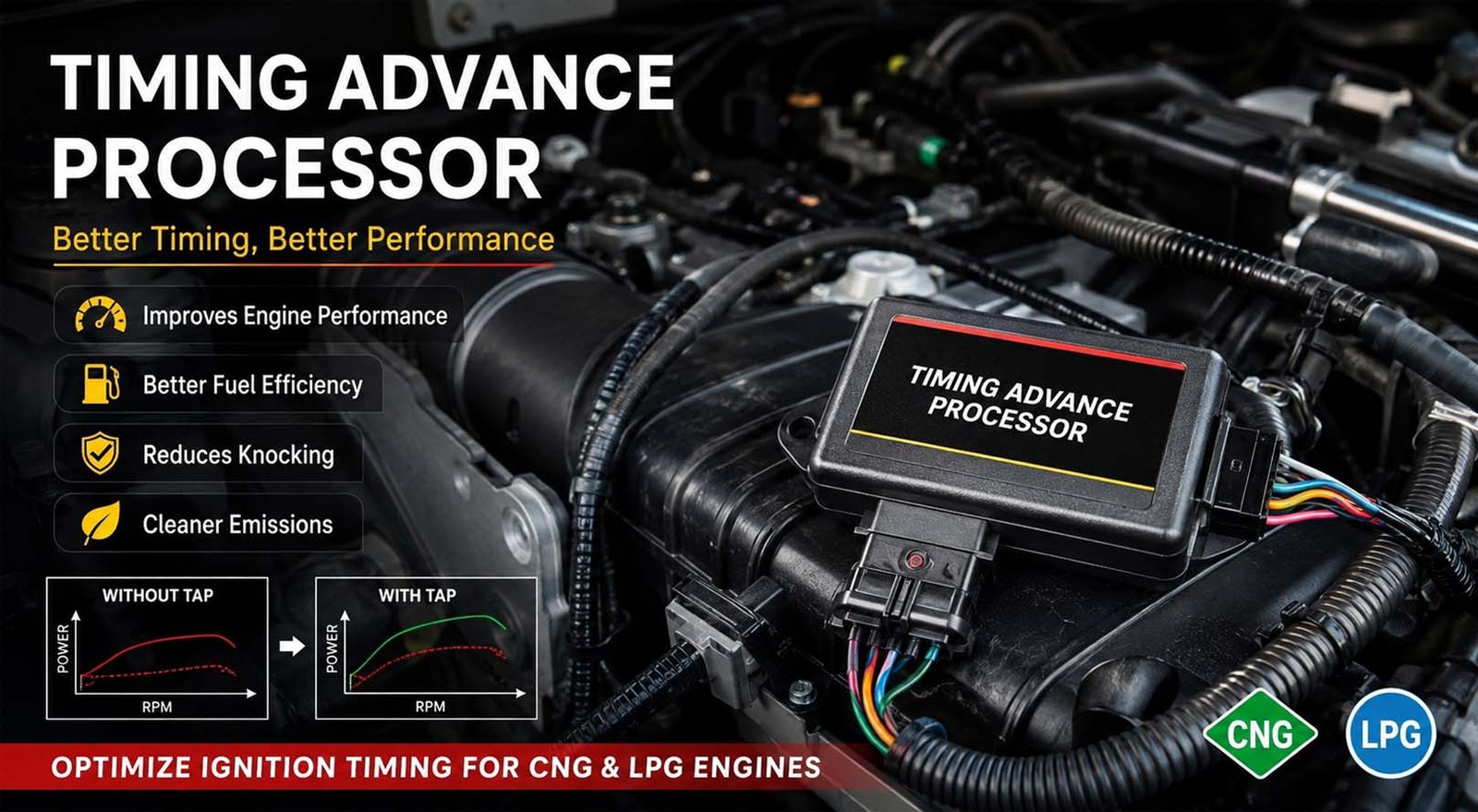
A timing advance processor, often called a TAP, is designed to adjust ignition timing so the fuel burns at the right moment. This can help improve power, fuel use, and overall engine performance. It is commonly used in vehicles that run on alternative fuels.
In this guide, we will explain everything in very simple words. You will learn what a timing advance processor is, how it works, why it is important, and how it helps engines run better. We will also look at different system types, benefits, and important things every vehicle owner should know.
What Is a Timing Advance Processor?
A timing advance processor is a small electronic unit that changes the timing of the spark inside an engine. It works by adjusting the signal that controls when the spark plug fires. This helps the fuel burn at the correct time inside the engine.
The main job of a timing advance processor is to improve combustion. Combustion is simply the process of fuel burning inside the engine. When fuel burns at the right time, the engine can create more useful power and work more smoothly.
This device is especially popular in vehicles that use CNG or LPG. These fuels do not burn exactly like petrol. Because of this difference, the engine often needs a small timing adjustment to get the best results.
You can think of a timing advance processor as a helper between the ignition system and the engine. It watches timing signals and changes them when needed. This simple adjustment can make a noticeable difference in how the vehicle drives.
Many modern timing advance processor units also include safety features. One of the most useful features is an emergency bypass connector. If something goes wrong, the system can return the vehicle to its original factory timing so the driver can continue using the vehicle safely.
Why Engine Timing Is Important
Engine timing is one of the most important parts of engine performance. It controls when the spark plug creates a spark to ignite the fuel and air mixture inside the engine cylinder.
If the spark happens too early or too late, the fuel may not burn properly. When this happens, the engine may lose power, waste fuel, or feel rough while driving. In some cases, drivers may even hear knocking sounds from the engine.
Imagine pushing a child on a swing. If you push at the right moment, the swing moves smoothly and goes higher. If you push too early or too late, the swing does not move as well. Engine timing works in a very similar way.
Proper timing helps the engine use fuel more efficiently. It also helps create smoother acceleration, better power delivery, and more comfortable driving. This is why ignition timing is such an important part of vehicle performance.
When timing is adjusted correctly, the engine can get more value from every drop of fuel. This becomes even more important when using fuels such as CNG and LPG because they have different burning characteristics compared to petrol.
How a Timing Advance Processor Works
A timing advance processor works by taking control of ignition timing signals. It receives the original signal and then changes it slightly before sending it to the ignition system.
The goal is simple. The processor makes the spark happen earlier than it normally would. This small change helps alternative fuels burn more completely and more efficiently inside the engine.
Many CNG and LPG fuels burn more slowly than petrol. Because of this slower burn, the spark often needs to happen earlier. If the spark happens at the normal petrol setting, the fuel may not burn at the best time.
The timing advance processor solves this problem by advancing the ignition timing. This means the spark is moved forward by a few degrees so combustion can happen at the ideal moment.
Different timing advance processor models offer different timing ranges. Some units allow adjustments of up to 20 degrees, 25 degrees, or even 30 degrees depending on the vehicle and ignition system. Some advanced models can also be programmed for specific engine needs.
Why CNG and LPG Vehicles Need It
CNG and LPG have become popular because they are often cheaper and cleaner than petrol. Many drivers switch to these fuels to reduce running costs and lower emissions.
However, these fuels do not behave exactly like petrol. Their combustion process is different. In many cases, they burn more slowly and need slightly different ignition timing to perform well.
When a vehicle uses petrol timing settings while running on CNG or LPG, the engine may not work as efficiently as possible. Drivers may notice lower power, slower acceleration, or reduced fuel economy.
A timing advance processor helps fix this issue. By changing ignition timing, it allows the engine to match the fuel’s burning speed more closely. This helps the engine produce better results while using alternative fuels.
CNG has a higher octane rating than petrol. This often allows more timing advance without causing engine knock. LPG also benefits from timing adjustment because its fuel properties are different from standard petrol. In both cases, a timing advance processor can help the engine perform closer to its full potential.
Main Benefits of a Timing Advance Processor
One of the biggest benefits of a timing advance processor is improved engine performance. When fuel burns at the correct time, the engine can produce power more effectively. Many drivers notice smoother acceleration and better response after proper timing adjustment.
Fuel economy is another major benefit. Since the fuel burns more completely, the engine may need less fuel to produce the same amount of power. Over time, this can help reduce fuel costs for drivers who regularly use CNG or LPG.
A properly adjusted timing advance processor can also reduce engine knocking. Knocking happens when combustion does not occur in the ideal way. Correct timing helps create a smoother combustion process and reduces the chance of unwanted engine noise.
Many drivers also appreciate the cleaner combustion that comes with proper timing adjustment. Better fuel burning can help lower harmful emissions and support cleaner engine operation. This is one reason alternative fuel systems often include ignition timing improvements.
Another benefit is improved driving comfort. The vehicle may feel smoother during daily driving, especially during acceleration or when carrying loads. Small timing changes can create noticeable improvements in how the engine feels on the road.
Types of Timing Advance Processor
Not every vehicle uses the same ignition system. Because of this, different timing advance processor models are designed for different types of vehicles and engines.
Older vehicles often use mechanical breaker point ignition systems. These systems rely on mechanical parts to control ignition timing. For these vehicles, processors such as the AEB531 are commonly used to work with the existing setup.
Many vehicles use electronic ignition systems with a distributor. These systems replace mechanical points with electronic switching. Popular processor models for these systems include AEB526N and AEB549N, which are designed to work with electronic ignition signals.
Some vehicles use more advanced ignition module systems. These systems often require programmable timing advance processor units such as the AEB515N. These processors allow more detailed timing adjustments based on vehicle needs.
Modern vehicles often use crankshaft position sensor systems. These systems use sensors to provide exact engine position information. Some use inductive sensors, while others use Hall effect sensors. Special processor models are available for each sensor type to ensure proper signal handling and accurate timing control.
Timing Advance Processor and Ignition Systems
One of the most important parts of choosing a timing advance processor is understanding the vehicle’s ignition system. A processor must match the system correctly to work properly.
Mechanical breaker point systems use a different signal type than modern electronic systems. Because of this, a processor designed for one system may not work correctly with another. Proper compatibility is very important.
Electronic ignition systems with distributors often connect through ignition module signals. These systems need processors that can read and adjust electronic timing signals accurately. Using the correct processor helps ensure stable engine operation.
Vehicles with crankshaft position sensors require even more precise signal processing. These sensors provide important timing information to the engine. A compatible timing advance processor must handle these signals without causing errors.
Choosing the correct processor for the ignition system helps avoid many common problems. It can improve reliability, simplify installation, and ensure the engine receives the timing adjustments needed for the best performance.
How to Choose the Right Timing Advance Processor
Choosing the right timing advance processor is very important. You cannot pick any model and expect it to work perfectly. Every vehicle has its own ignition setup. So, the first step is to know what type of ignition system your vehicle has.
Some older vehicles use mechanical breaker points. Some use electronic ignition with a distributor. Some modern vehicles use crankshaft position sensors. Each system sends timing signals in a different way, so each one needs the right type of timing advance processor.
You should also check the fuel type. Some processors work with both CNG and LPG. Some may be made for a certain setup only. If your vehicle runs on both petrol and gas, you should choose a unit that supports safe and smooth fuel switching.
The timing range also matters. Some processors offer 0 to 20 degrees of advance. Some offer 0 to 25 degrees. Some CKP sensor models can offer up to 30 degrees. A programmable model can be useful when the engine needs special tuning.
It is also wise to choose a timing advance processor with an emergency connector. This small safety feature can help the vehicle return to factory timing if the processor has a fault. For daily drivers, this can be a very helpful backup.
Basic Installation Steps
Installing a timing advance processor should be done with care. It is not just a plug-and-play job for every vehicle. The correct wires must be found, the right signal must be used, and the unit must be set properly after fitting.
The first step is always safety. The vehicle battery should be disconnected before any wiring work starts. This helps protect the vehicle’s electrical parts and keeps the installer safe while making the connections.
After that, the installer must find the correct connection points. In older breaker point systems, the processor is often connected between the distributor and the ignition coil. In electronic systems, it may connect with the ignition module signal wire.
In CKP sensor systems, the timing advance processor is fitted in line with the crankshaft position sensor signal. This part needs extra care because the sensor signal is very important for engine timing. Wrong wiring can cause starting or running problems.
Once the wiring is done, the processor must be adjusted. Some units use a small knob called a potentiometer. Some use DIP switches. Some are programmable. After setting the timing, the engine should be tested at idle and at different RPM levels.
Common Problems and Simple Fixes
A timing advance processor can improve engine performance, but wrong fitting or wrong settings can cause problems. The good thing is that many issues are easy to understand when you know what to check.
If the engine knocks while running on CNG or LPG, the timing advance may be too low. This means the spark is not early enough for the fuel to burn properly. In this case, the advance setting may need to be increased carefully.
If the vehicle feels weak or slow during acceleration, the timing may be too high. Too much advance can make the engine feel rough or heavy. In this case, the setting should be reduced step by step until the engine feels smooth again.
If the engine does not start after installation, the first thing to check is wiring. A loose wire, wrong signal wire, weak ground, or missing power supply can stop the system from working. The 12V power and ground must be checked properly.
A rough idle can also happen if the timing setting is not right at low speed. Some systems have idle bypass settings or idle advance control. These settings help the engine stay smooth when the vehicle is not moving.
Emergency Connector and Safety Use
The emergency connector is one of the most useful parts of many timing advance processor units. It works like a backup path for the ignition signal. If the processor fails, the emergency connector can bypass it.
When the emergency connector is used, the ignition system returns to its original factory timing. This means the vehicle can keep running without the timing advance processor changing the signal. This is helpful during faults or checks.
For example, imagine a driver is far from home and the engine starts running badly after a TAP issue. Instead of being stuck, the emergency connector can help the vehicle run on normal timing until proper repair is done.
Technicians also use the emergency connector during testing. It helps them compare engine behavior with and without timing advance. This makes it easier to find out if the issue is from the processor, wiring, fuel system, or another part.
This is why a timing advance processor with an emergency connector is often a better choice. It adds safety, makes checks easier, and gives the driver more peace of mind.
Care and Tuning Tips
A timing advance processor does not need daily care, but it should not be ignored forever. Like other engine parts, it can work better when it is checked from time to time.
The wiring should be inspected to make sure it is clean, tight, and safe. Heat, water, dust, and loose connections can cause problems. The unit should be mounted in a safe place away from high heat and moisture.
The timing setting may also need checking after some time. As an engine gets older, its behavior can change. Spark plugs, coils, sensors, and fuel system parts can also affect performance. A small timing change may help the engine stay smooth.
For best results, tuning should be done with proper tools. A timing light can help on older systems. An oscilloscope can help check CKP sensor signals. Professional installers may also test the vehicle across different RPM levels.
Drivers should also pay attention to real signs. If the vehicle starts knocking, losing power, using more fuel, or idling badly, the timing advance processor setting should be checked. Small signs can help prevent bigger problems later.
Timing Advance Processor vs ECU Tuning
Some people wonder if a timing advance processor is the same as ECU tuning. They are not the same. Both can affect engine performance, but they work in different ways.
A timing advance processor mainly changes ignition timing signals. It is often used in CNG and LPG systems to help the spark happen earlier. It is a separate device added to the vehicle.
ECU tuning changes the software inside the engine control unit. It can adjust many things, such as fuel delivery, air control, timing maps, and other engine settings. This is usually more complex.
For many CNG and LPG conversions, a timing advance processor is a simple and useful choice. It gives the engine better timing without changing the whole ECU software. This makes it helpful for many older and mid-range vehicles.
However, modern vehicles may need a more careful approach. Some advanced engines already control timing through the ECU. In these cases, expert advice is important before adding any timing device.
Final Thoughts
A timing advance processor may look like a small part, but it can make a big difference in how a CNG or LPG vehicle runs. It helps the spark happen at a better time, so the fuel burns more smoothly inside the engine.
When timing is right, the engine can feel stronger, smoother, and more efficient. It may also reduce knocking, improve fuel use, and support cleaner running. This is why many alternative fuel systems use a timing advance processor.
The most important thing is choosing the right model. The processor must match the vehicle’s ignition system, fuel type, timing range, and sensor setup. A wrong match can cause poor results or engine problems.
Installation should also be done carefully. Good wiring, proper grounding, correct adjustment, and testing are all important. If the vehicle has a modern CKP sensor system, expert help is even more useful.
In simple words, a timing advance processor helps the engine work better with fuels like CNG and LPG. When selected and tuned properly, it can give better power, better fuel economy, and a smoother driving feel.
(FAQs)
What is a timing advance processor?
A timing advance processor is a small electronic device that adjusts ignition timing. It helps the spark happen earlier so fuels like CNG and LPG can burn better inside the engine.
Why is a timing advance processor used in CNG vehicles?
CNG often burns slower than petrol. A timing advance processor helps by moving the spark timing forward. This can improve power, fuel economy, and smooth driving.
Can a timing advance processor improve fuel economy?
Yes, it can help improve fuel economy when it is set correctly. Better timing helps the fuel burn more fully, so the engine can use fuel more efficiently.
Is a timing advance processor safe for all vehicles?
It is safe when the right model is chosen and installed correctly. Not every processor fits every vehicle, so ignition system matching is very important.
What happens if the timing advance setting is wrong?
Wrong timing can cause knocking, poor acceleration, rough idle, or starting problems. The setting should be adjusted carefully and tested after installation.
Does a timing advance processor need maintenance?
Yes, it should be checked from time to time. Wiring, power, ground, and timing settings should be inspected, especially if the engine starts running badly.
Is a timing advance processor the same as ECU tuning?
No, it is different. A timing advance processor adjusts ignition timing signals. ECU tuning changes engine software and can control more parts of the engine system.
Don’t miss these:
How Sofoximmo Helps Buyers, Sellers, and Landlords Succeed
SEO by HighSoftware99.com: What It Is and How It Really Works





 Biography7 months ago
 News6 months ago
 Blog3 months ago
 Biography7 months ago