Travel
Scuba Diving in Fiji: A Diver’s Guide to the World’s Soft Coral Capital
Fiji sits firmly on every serious diver’s wishlist. Its reefs glow with color few other places can match. This guide explores the top dive regions, the marine life, and the conditions you can expect. By the end, you will understand why divers return here again and again.
What Earned Fiji Its Famous Title
The legendary explorer Jacques Cousteau named Fiji the Soft Coral Capital of the World. The name has defined its diving ever since. Few places live up to such a title so completely.
Strong, nutrient-rich currents feed these reefs. The soft corals drink in the flow and swell with color. Pinks, purples, oranges, and reds light up the walls.
This creates a underwater scene unlike any other. Coral gardens spread across walls, pinnacles, and channels. Every dive feels like swimming through a living painting.
The Marine Life You Will Encounter
Fiji’s reefs support an astonishing variety of life. The numbers alone are impressive. Around 390 coral species and over 1,200 fish species thrive here.
Common sightings include:
- Clouds of pink and orange anthias
- Reef sharks patrolling the walls
- Sea turtles gliding over coral
- Manta rays in certain channels
- Schooling barracuda and trevally
- Tiny macro life like nudibranchs and pipefish
Larger pelagics also pass through. Divers spot eagle rays, tuna, and even pilot whales. Each region offers its own marine highlights.
Fiji’s Top Dive Regions
Fiji spreads its diving across many island groups. Each region has a distinct character. Knowing them helps you plan your dive trip.
Beqa Lagoon and Pacific Harbour
This southern lagoon is famous for shark diving. It also offers calm reefs, pinnacles, and wrecks. Easy access from Viti Levu makes it popular.
A trip built around this region rewards every kind of diver. Booking through a base near the lagoon keeps the best sites close. A stay focused on scuba diving in Fiji puts both shark dives and soft coral reefs within easy reach.
The Rainbow Reef and Somosomo Strait
This area near Taveuni is a soft coral icon. The Great White Wall is its crown jewel. White soft corals blanket a dramatic vertical drop.
Bligh Water
This channel between the main islands dazzles divers. Current-swept pinnacles burst with soft coral. Sites like E-6 and Cat’s Meow are legendary.
Namena and the Great Astrolabe Reef
Namena Marine Reserve is pristine and protected. The Great Astrolabe Reef off Kadavu is one of the world’s largest. Both offer rich coral and big marine life.
Signature Dive Experiences
Some Fiji dives stand out above the rest. They draw divers from across the globe. Each offers a unique thrill.
The Great White Wall feels almost surreal. Its white corals stretch beyond sight. Drifting along it ranks among diving’s great moments.
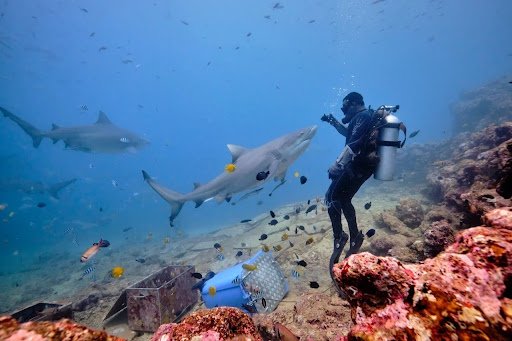
The Beqa Lagoon shark dive is world-famous. Divers watch bull sharks and reef sharks up close. It is a controlled, unforgettable encounter.
Soft coral pinnacles in Bligh Water amaze photographers. They rise from the depths covered in color. Schools of fish swirl around their peaks.
Diving Conditions and Currents
Fiji’s currents are the secret to its beauty. They feed the soft corals and draw in marine life. They also shape how and where you dive.
The strongest current sites hold the best coral. In full flow, the soft corals swell and glow. On slack tide, they can look limp and dull.
Currents vary by site and tide. Some channels suit advanced drift divers. Sheltered gardens stay calm for relaxed exploration.
Skill Levels for Fiji Diving
Fiji welcomes divers of all levels. The range of sites is part of its appeal. There is something for everyone underwater.
Beginners can enjoy calm, shallow coral gardens. These sites have gentle currents and easy conditions. Many resorts offer courses for new divers.
Advanced divers chase the current-swept walls. Strong drifts and deep pinnacles test their skills. Good buoyancy control matters most at these sites.
Best Time to Dive in Fiji
Fiji offers great diving all year. Still, conditions shift with the seasons. Timing can sharpen your experience.
The dry season runs from April to October. It brings calm seas and superb visibility. Water often clears beyond 100 feet during this window.
The wetter season runs November to April. Seas can turn flat and warm after rain. Outer reef sites usually stay clear and rewarding.
Tips for Your Fiji Dive Trip
A little planning improves every dive trip. These tips come from real diving knowledge. They help you make the most of your time.
Keep these points in mind:
- Match dive sites to your skill level
- Choose current sites for the best coral color
- Bring a 3mm or 5mm wetsuit by season
- Use nitrox for longer bottom times
- Book a base near your target reefs
- Pack a reef hook for strong drifts
Smart choices lead to better dives. The right base and timing shape your trip. Plan well, and Fiji delivers world-class diving.
Frequently Asked Questions
Why is Fiji called the Soft Coral Capital?
Jacques Cousteau gave it the name. Strong currents feed its vivid soft corals. The result is some of the most colorful reefs on earth.
Is Fiji good for beginner divers?
Yes. Many sites offer calm, shallow coral gardens. Resorts run courses for new divers. Advanced sites with currents exist too.
What marine life can I see scuba diving in Fiji?
Expect soft corals, reef sharks, and turtles. Manta rays and pelagics appear in some regions. Macro life like nudibranchs is abundant.
Where is the best diving in Fiji?
Top regions include Beqa Lagoon, Rainbow Reef, and Bligh Water. Namena and the Great Astrolabe Reef are also superb. Each offers a different experience.
When is the best time to dive in Fiji?
The dry season, April to October, brings calm seas and clear water. Visibility often tops 100 feet. The wetter season still offers good outer reef diving.
Do I need experience for the soft coral sites?
Many soft coral sites sit in current. Good buoyancy control helps a lot. Beginners can start on calmer reefs first.
Final Thoughts
Scuba diving in Fiji is a bucket-list experience for good reason. You explore glowing soft coral, dramatic walls, and rich marine life. With sites for every level and warm water year-round, it suits all divers. Plan your trip, pick your region, and prepare for diving you will never forget.
-
Biography4 months agoThe Emotional Journey of Joanne Schieble Simpson, Steve Jobs’ Biological Mother
-

News4 months agoJamal Adeen Thomas – Everything You Should Know About Clarence Thomas’ Son
-

Biography4 months agoMeet Theo Ressler: Everything You Know About Jami Gertz’s son
-
Tech3 months agoBynethi com Explained Clearly: Benefits, Risks, and What to Expect