For much of Europe, autumn means shorter days, colder evenings and the gradual retreat indoors. Madeira follows a different rhythm.
September can still feel distinctly summery along the coast. October brings softer Atlantic light and comfortable days for exploring, while even November remains mild compared with much of continental Europe. The swimming season does not abruptly end when August does, nor does island life suddenly move indoors.
But Madeira in autumn is not simply summer with fewer people. The season has a character of its own. Rain becomes more likely as the weeks pass, the high mountains can disappear behind cloud without much warning, and plans occasionally need to change.
That flexibility is part of the appeal.
For travellers who enjoy walking, food, small towns, ocean views and days that do not need to be scheduled down to the hour, autumn may be one of the most rewarding times to experience the island.
Madeira After the Summer Rush
Madeira has never fitted neatly into the classic beach-resort category. The island is too vertical, too varied and too tempting to explore.
A relatively short journey can take you from the streets of Funchal to banana terraces, deep green valleys, exposed mountain ridges or a small settlement overlooking the Atlantic. The historic levadas — irrigation channels that cross much of the landscape — add another layer, creating walking routes through terrain that would otherwise be difficult to reach.
During autumn, travelling around the island begins to feel less hurried.
The major attractions do not become deserted, and places such as Funchal, Cabo Girão or the best-known mountain viewpoints remain popular. Yet moving beyond the busiest summer period gives you more reason to pay attention to everything between them.
An intended coffee stop in Câmara de Lobos can turn into lunch. A detour towards Ponta do Sol may last longer because the weather happens to be better there. A cloudy morning in the mountains can become an afternoon on the coast instead.
Madeira rewards this kind of improvisation because distances are manageable while landscapes change remarkably quickly.
Rather than trying to complete the island, autumn is a good season to let it interrupt your plans.
Understanding Madeira’s Autumn Microclimates
Weather forecasts for Madeira need a little interpretation.
The island’s mountainous terrain creates pronounced microclimates, so conditions can differ substantially between the coast, the interior and higher elevations. It may be warm and bright in Funchal while cloud sits over Pico do Areeiro. The north can be receiving rain while the south-west remains dry.
That variation becomes particularly important in autumn.
September and October can still produce plenty of warm, settled days, but rainfall generally becomes more frequent as the season progresses. Higher ground can also feel much cooler than the coast, especially when wind and fog move in.
The practical response is simple: avoid building an itinerary in which every day depends on one specific location.
If the mountains are clear, use the opportunity. If they are covered in cloud, explore a coastal town, visit Funchal, find a restaurant or spend time near the sea. Conditions may be completely different the following morning.
This is also why layers matter more than a heavy autumn wardrobe. Shorts and a T-shirt can make perfect sense near the coast while a light waterproof jacket and warmer layer are useful only a short drive away.
Walk the Levadas, but Don’t Turn the Holiday Into a Marathon
Madeira’s walking routes deserve their reputation. The island contains everything from gentle levada paths to demanding mountain trails, and autumn temperatures can make long periods outdoors considerably more comfortable than during hotter weather.
That does not mean every day needs to become a hiking challenge.
One of the most distinctive environments is the Laurisilva, Madeira’s UNESCO-listed laurel forest. Moist air, old trees, ferns and steep green valleys create a landscape that feels completely removed from the sunny coastal settlements below.
Elsewhere, levada walks pass through agricultural areas, tunnels, woodland and narrow valleys. More exposed trails reveal another Madeira entirely, with ridges dropping sharply towards the Atlantic.
Choose routes according to conditions rather than reputation. Rain, fog and strong wind can affect trails even when the coast appears calm, and temporary restrictions or closures are possible.
Checking the official trail status before setting out is therefore more useful than stubbornly following an itinerary written weeks earlier.
Sometimes the best hiking decision on Madeira is not to hike that particular day.
The Atlantic Still Belongs in an Autumn Holiday
It is surprisingly easy to visit Madeira, become absorbed by its mountains and forget that the Atlantic is one of the main reasons the island looks the way it does.
Autumn is no reason to ignore it.
Sea temperatures change more slowly than air temperatures, and Madeira’s waters remain mild enough for swimming and other marine activities through much of the year. Whale and dolphin watching is also a year-round activity around the archipelago, although wildlife sightings can never be guaranteed.
There is another reason to get offshore: perspective.
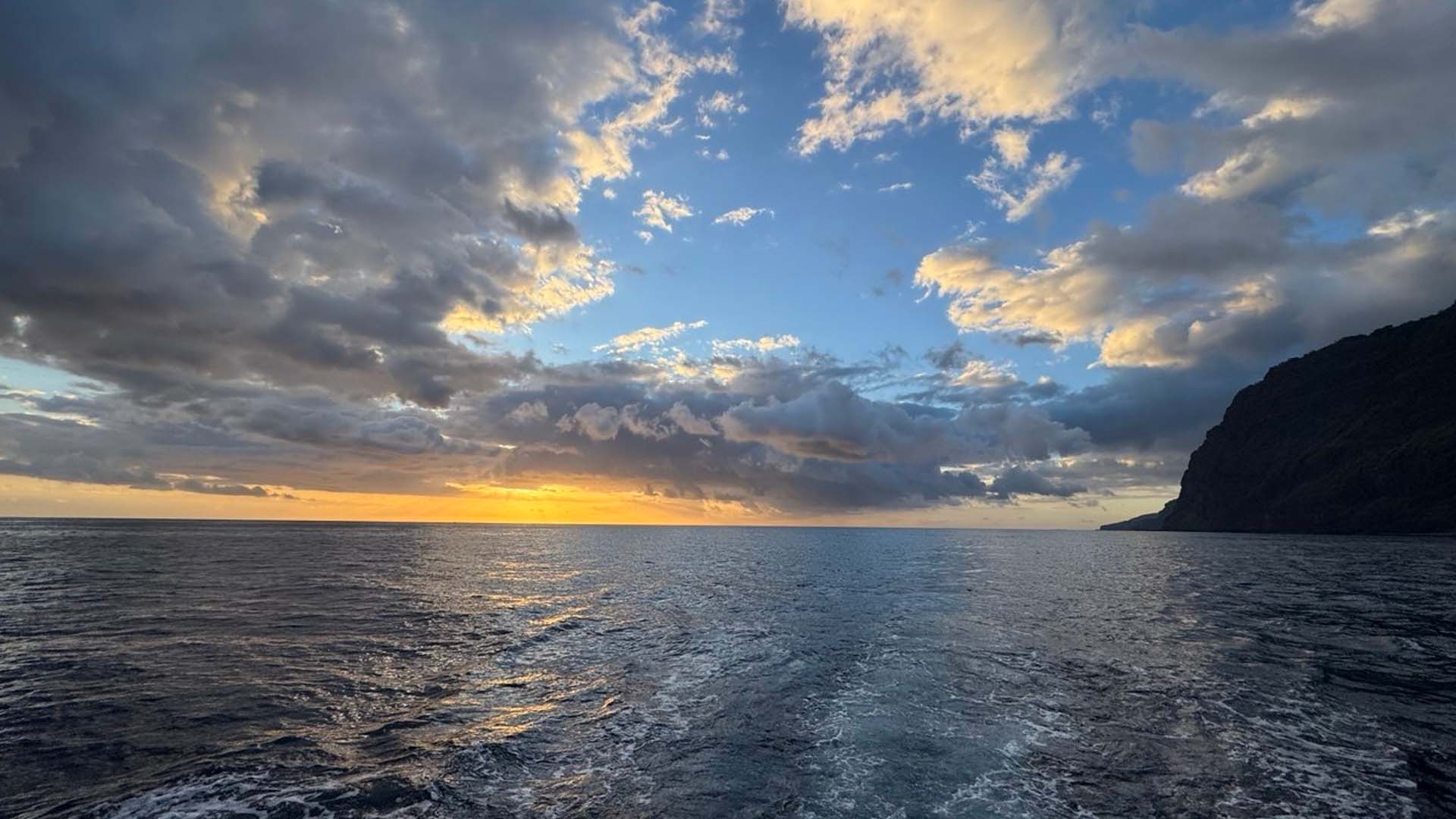
From land, Madeira can feel like a succession of steep roads, terraces and mountains. From the water, the geography suddenly makes sense. The settlements appear to cling to the slopes, ravines cut into the volcanic landscape, and cliffs rise directly from the Atlantic.
Cabo Girão, for example, reaches about 580 metres above sea level. Seen from below rather than from its famous viewpoint, the scale of the south coast becomes much more apparent.
Leaving part of a day open for boat trips in Madeira can therefore work as a natural contrast to several days spent walking or driving around the island. The attraction is not necessarily how many places can be covered. Sometimes the change of pace is the point: a few hours offshore, time to swim if conditions allow, and a view of Madeira that cannot be reproduced from another miradouro.
As with hiking, it makes sense to keep the exact day flexible and let sea and weather conditions influence the decision.
Funchal, Coastal Towns and Lunches That Take Longer Than Planned
Not every memorable part of a Madeira trip needs dramatic scenery.
Funchal deserves more than a hurried morning between excursions. Its waterfront, gardens, historic centre, markets and restaurants make it an easy place to spend an unscheduled day, particularly when conditions in the mountains are uncertain.
The smaller towns add another rhythm.
Câmara de Lobos sits around a fishing harbour only a short distance from the capital but feels noticeably different. Ponta do Sol combines a compact historic centre with a particularly striking coastal setting. On the north side, São Vicente places you in a greener, more enclosed landscape shaped by steep valleys.
None needs an elaborate checklist.
Walk, stop for coffee, take the long way back and make room for lunch.
Madeiran food is particularly good at slowing an itinerary down. Try bolo do caco, the island’s warm round bread traditionally served with garlic butter; black scabbardfish (espada), frequently paired with banana; or espetada, beef seasoned and traditionally cooked on a bay-laurel skewer.
Then there is poncha, the potent local drink associated with sugarcane spirit, honey and citrus.
These dishes are more useful to a traveller than another list of attractions because they create reasons to stay somewhere for a while. Madeira is an island where lunch can quite reasonably become one of the day’s main events.
Leave Room for a Day That Is Entirely Your Own
The advantage of travelling outside the busiest part of summer is not simply that some places feel quieter. It is having more freedom to decide what a good day actually looks like.
That matters especially for couples, families or a small group of friends.
A day does not need five attractions to justify itself. It might involve driving with no fixed destination, swimming somewhere along the south coast, spending an afternoon over lunch or simply choosing one experience and giving it more time.
The same principle works offshore. A private boat charter in Madeira makes most sense not as another excursion to squeeze into the schedule, but as the opposite: several hours in which the pace can be shaped around the group, conditions and the kind of day everyone wants.
For an anniversary, birthday, family outing or simply some privacy away from larger organised groups, that freedom can matter more than covering a predetermined route.
It is also very much in keeping with the way Madeira works best in autumn. Plans remain plans until the island gives you a better idea.
What to Pack for Madeira in Autumn
Packing for Madeira is less about preparing for genuinely cold weather than preparing for different conditions within the same day.
A practical autumn suitcase should cover a few situations:
- Light everyday clothing for warm afternoons around Funchal and the coast.
- A waterproof or wind-resistant outer layer for showers, exposed viewpoints and higher elevations.
- A fleece or light sweater if mountain walks are part of the itinerary.
- Walking shoes with reliable grip, particularly for levadas and damp paths.
- Swimwear, because autumn does not automatically mean the end of swimming.
- Sun protection and sunglasses, which remain useful on clear days regardless of the month.
A small daypack makes it easy to carry the extra layer you may not need at sea level but will appreciate once the road starts climbing.
Is Autumn a Good Time to Visit Madeira?
That depends on what you want from the trip.
If the priority is the greatest possible chance of consistently hot, dry weather, summer has an obvious advantage. Autumn introduces more uncertainty, particularly later in the season, and mountain plans occasionally have to be reconsidered.
For a different type of traveller, those compromises are relatively small.
The climate remains mild. The Atlantic remains part of everyday life. Walking can be comfortable, towns settle into a calmer rhythm, and there is less temptation to treat every day like a race between attractions.
Most importantly, Madeira gives you alternatives.
Clear morning? Head into the mountains.
Cloud sitting on the peaks? Follow the coast.
Warm afternoon? Get near the water.
Rain passing through? Have lunch, explore Funchal and try again later.
Perhaps that is why Madeira in autumn works particularly well for people who have stopped measuring a holiday by how much they managed to fit into it.
The island is still dramatic. There is simply more room to experience it at its own pace.





 Biography7 months ago
 News6 months ago
 Blog3 months ago
 Biography7 months ago