Have you ever wished for a tree that looks beautiful during every season of the year? Many trees look great for a few months, but then lose their charm when the season changes. That is one reason why so many homeowners and gardeners are choosing the navigator pear. It is a tree that brings beauty, color, and structure to outdoor spaces almost all year long.
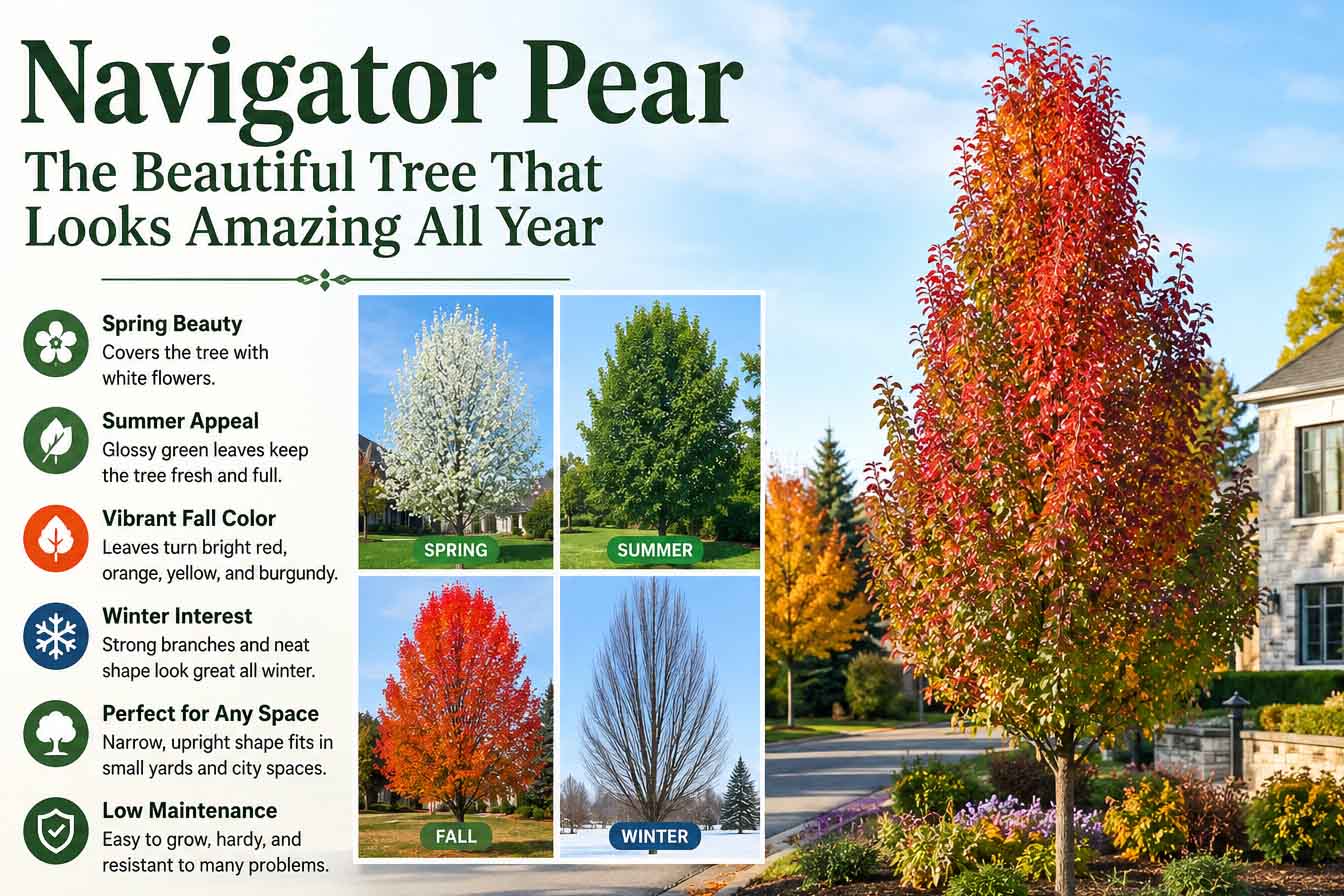
The navigator pear has become more popular in recent years because it offers something special in every season. In spring, it fills with bright white flowers. During summer, it stays fresh with glossy green leaves. When fall arrives, the tree turns into a colorful display of red, orange, yellow, and burgundy shades. Even during winter, its neat shape helps it stand out in the landscape.
Another reason people love this ornamental pear tree is that it does not create the same fruit mess that many other pear trees do. Homeowners often want a tree that looks beautiful without dropping large amounts of fruit onto sidewalks, patios, and driveways. The navigator pear solves that problem while still providing impressive beauty.
Whether you have a small front yard, a large garden, or a busy city property, this tree can fit into many different spaces. Its narrow shape makes it useful where larger trees may not work very well. It gives height and beauty without taking over the entire area.
In this guide, we will explore everything you need to know about the navigator pear. We will look at its size, shape, flowers, leaves, fall color, growing needs, and the reasons it has become one of the most popular ornamental trees in 2026.
What Is a Navigator Pear?
Main Points We Will Cover
The navigator pear is an ornamental pear tree. This means it is grown mainly because of how it looks rather than for producing fruit. While some pear trees are planted so people can harvest pears to eat, the navigator pear is planted to make landscapes more beautiful.
Its botanical name is Pyrus ‘DurPSN303’. Although that name may sound technical, most people simply know it as the navigator pear or navigator ornamental pear. It was developed to provide beautiful flowers, strong fall color, and a neat growth habit that works well in modern landscapes.
Many homeowners choose this tree because it gives them the beauty of a pear tree without many of the problems that come with fruit production. It usually produces very little fruit, which means fewer stains, less cleanup, and fewer pests around patios, driveways, and walkways.
The navigator pear is also known for being reliable. It grows well in many locations, handles cold weather, and adapts to different growing conditions. Because of this, it has become a favorite among gardeners, landscape designers, and property owners.
You can find this tree in front yards, along driveways, near entrances, and even in commercial landscapes. Its clean look helps create a polished appearance that works in both traditional and modern designs.
Why Navigator Pear Looks So Beautiful
Main Points We Will Cover
One of the first things people notice about the navigator pear is its attractive shape. Instead of spreading out in every direction, it grows upward in a neat and organized way. This gives the tree a clean look that many homeowners find appealing.
Its pyramidal form helps it fit into many different landscape styles. Whether the garden is formal, modern, or traditional, the navigator pear often blends in beautifully. It provides structure without looking too stiff or unnatural.
Another reason this tree stands out is that it offers beauty throughout the year. Some trees look amazing for a few weeks and then become ordinary. The navigator pear keeps changing with the seasons, giving people something new to enjoy throughout the year.
Think about walking outside in spring and seeing bright white flowers. Then imagine seeing rich green leaves during summer and brilliant red and orange colors during fall. That changing display is one of the biggest reasons people choose this tree.
Even after the leaves fall, the navigator pear still keeps its graceful shape. During winter, when many plants look bare and plain, this tree continues adding structure and beauty to the landscape.
Navigator Pear Size and Shape
Main Points We Will Cover
Many people want a tree that adds beauty without becoming too large. The navigator pear does exactly that. A mature tree usually grows between 20 and 26 feet tall, which gives it a noticeable presence without becoming overwhelming.
Its width is much smaller than many shade trees. Most mature navigator pear trees spread about 12 to 13 feet wide. This narrow growth habit is one of the biggest reasons for its popularity.
Because the tree grows upward instead of outward, it works very well in smaller landscapes. Homeowners with limited yard space often struggle to find trees that fit comfortably. The navigator pear provides a great solution because it adds height while using less ground space.
This shape makes it ideal for front yards, side yards, driveways, and garden entrances. It can also be planted near property lines where wider trees might create problems later.
Landscape designers often use the navigator pear to create strong vertical interest. A row of these trees can make a driveway look elegant, while a single tree can become a beautiful focal point in the yard.
Navigator Pear Flowers in Spring
Main Points We Will Cover
-
White spring flowers
-
Flower clusters
-
Seasonal beauty
-
Pollinator benefits
Spring is one of the most exciting times of the year for the navigator pear. As temperatures begin to warm, the tree becomes covered with clusters of bright white flowers that create a stunning display.
The blossoms appear across the branches and can quickly turn the tree into the center of attention. When several navigator pear trees bloom together, the effect can be even more impressive and eye-catching.
Many homeowners look forward to this flowering season because it signals the arrival of warmer weather. After months of winter landscapes, the bright flowers bring fresh energy and color back into outdoor spaces.
The flowers are not only beautiful for people to enjoy. They can also attract pollinators such as bees and other helpful insects. These visitors play an important role in supporting healthy gardens and outdoor environments.
The spring bloom does not last forever, but it creates a memorable display that many people consider one of the tree’s greatest features.
Navigator Pear Leaves in Summer
Main Points We Will Cover
-
Leaf appearance
-
Summer beauty
-
Canopy shape
-
Healthy green color
After the flowers fade, the navigator pear continues to impress with its attractive summer foliage. The tree develops glossy dark green leaves that help it maintain a fresh and healthy appearance throughout the growing season.
Many of the leaves are heart-shaped, giving the tree a softer and more welcoming look. Their shiny surface reflects sunlight and helps the canopy stand out even from a distance.
During hot summer months, the rich green foliage provides a clean and polished appearance. This is one reason why the tree remains popular long after the spring flowers have disappeared.
The dense canopy also helps create visual fullness. Instead of looking thin or sparse, the navigator pear develops a balanced and attractive crown that fits well into many landscape designs.
Whether it is planted in a residential garden or along a commercial property, the glossy leaves help the tree maintain its beauty throughout summer.
Navigator Pear Fall Colors
Main Points We Will Cover
-
Fall color changes
-
Red, orange, yellow, and burgundy shades
-
Seasonal impact
-
Why homeowners love autumn displays
If spring flowers introduce the navigator pear, fall colors are often what make people fall in love with it.
As cooler weather arrives, the green leaves begin changing into bright and rich shades of color. Depending on the growing conditions, the tree may display red, orange, yellow, burgundy, or even several colors at the same time.
Many trees become less interesting as the growing season ends. The navigator pear does the opposite. In many landscapes, it becomes one of the most colorful and eye-catching trees during autumn.
Imagine driving through a neighborhood and seeing a tree glowing with deep red and orange leaves. That kind of display naturally attracts attention. It adds warmth and beauty to yards, parks, streets, and commercial landscapes.
Because of this amazing seasonal change, many landscape designers specifically choose the navigator pear to bring stronger fall color into their projects.
Best Place to Plant Navigator Pear
Main Points We Will Cover
-
Sunlight needs
-
Best planting locations
-
Space requirements
-
Important planting tips
Choosing the right location is one of the best ways to help a navigator pear thrive. The tree performs best when it receives full sun for most of the day. Plenty of sunlight helps produce healthier growth, more flowers, and brighter fall colors.
Many homeowners plant navigator pear trees near driveways, front entrances, sidewalks, and property lines. The tree’s narrow shape allows it to fit comfortably into these spaces without feeling crowded.
Its upright growth also makes it a great focal point in front yards. A single navigator pear can draw attention and create an elegant look throughout the year.
The tree can work very well in smaller spaces, but it still needs enough room to reach its full height. Since it can grow up to about 26 feet tall, it should not be planted directly beneath power lines or other overhead structures.
Its ability to fit into both small and large landscapes is one reason why so many people continue choosing the navigator pear for modern outdoor spaces.
Navigator Pear Growing Needs
The navigator pear grows best when it has the right basic care from the start. Like most trees, it needs sunlight, good soil, and enough water to grow strong. When these simple needs are met, the tree can show better flowers, healthier leaves, and stronger fall color.
Full sun is very important for this tree. A sunny place helps the navigator pear grow in a strong and balanced way. It also helps the tree bloom better in spring and turn brighter in fall. If the tree gets too much shade, it may still grow, but it may not look as full or colorful.
The tree can grow in many soil types, which makes it easy for many homeowners. It is not very picky about soil pH. This means it can handle different soil conditions as long as the ground drains well. Good drainage is very important because wet roots can make the tree weak over time.
Young trees need regular watering while their roots are still growing. Deep watering is better than giving a little water every day. It helps the roots move deeper into the soil. Once the tree is older, it usually needs less water, but it still benefits from extra water during hot and dry weather.
The navigator pear also handles cold weather very well. It is often recommended for very cold areas, including Zone 2a and above. This makes it a strong choice for northern places where many other ornamental trees may struggle.
Navigator Pear Care Tips
The navigator pear is loved because it is not too hard to care for. It gives a lot of beauty without asking for too much work. This makes it a good tree for busy homeowners who want a nice yard but do not want heavy maintenance.
Watering is most important during the first few years. When the tree is young, its roots need time to spread and settle into the soil. Giving it deep water once or twice a week during dry weather can help it grow strong and healthy.
Mulch can also help a lot. A soft layer of mulch around the base keeps the soil moist and helps stop weeds. But do not pile mulch against the trunk. Keep it a few inches away so the bark can stay dry and healthy.
If the soil is poor, a balanced fertilizer can be used in early spring. This gives the tree food as it starts a new growing season. Still, too much fertilizer is not needed. Overfeeding can push weak growth and may affect the tree’s neat shape.
A healthy navigator pear does not need daily attention. Simple care, clean soil, enough sun, and light watching are usually enough. If you check the tree now and then, you can spot small issues before they become bigger problems.
How to Prune Navigator Pear
Pruning helps the navigator pear stay clean, strong, and good-looking. The good news is that this tree already has a neat upright shape. So, most of the time, it only needs light pruning instead of heavy cutting.
The best time to prune is late winter. This is after the hardest cold has passed but before new spring growth begins. Pruning at this time helps the tree get ready for a fresh season without causing too much stress.
You should remove broken, dead, damaged, or crossing branches. These branches can make the tree look messy and may reduce airflow inside the canopy. Better airflow helps the tree stay healthier and lowers the chance of some problems.
It is also helpful to shape the tree gently while it is young. This helps build a strong frame for the future. A little pruning each year is often better than waiting many years and then cutting too much at once.
If you are not sure what to cut, start small. Remove only what is clearly damaged or growing in the wrong direction. The goal is not to change the whole tree. The goal is to help the natural shape look its best.
Navigator Pear in Small and City Spaces
One of the best things about the navigator pear is how well it fits into small spaces. Many homes today do not have very large yards. People want trees that look beautiful but do not take over the whole area. This tree is a great match for that need.
Its narrow upright shape allows it to grow where wider trees may not fit. It can work well in front yards, side yards, beside driveways, and near walkways. It adds height and color while still leaving space for grass, flowers, and paths.
The navigator pear is also useful in city areas. Cities can be hard places for trees because of pollution, small planting spots, and busy roads. This tree can handle urban conditions better than many other ornamental trees.
That is why it is often used near office buildings, shopping areas, streets, and public spaces. It gives these places a softer and more welcoming look. In spring, the white flowers brighten the area. In fall, the red and orange leaves make the space feel warm and alive.
For formal designs, the tree also works very well. It can be planted in rows, near entrances, or along property lines. Its clean shape gives a smart and balanced look without needing constant trimming.
Why Navigator Pear Is a Smart Choice
The navigator pear is a smart choice because it gives beauty in more than one season. It is not a tree that looks nice for only a short time. It brings flowers in spring, green leaves in summer, bright colors in fall, and strong shape in winter.
Another big benefit is its low fruit mess. Some pear trees drop fruit that can stain paths, attract pests, and create cleanup work. The navigator pear rarely produces much fruit, so it is easier to enjoy near patios, sidewalks, driveways, and entrances.
This tree is also known for being long-lasting. Under good growing conditions, it can live for 50 years or even longer. That means it can become a lasting part of the yard and keep adding beauty for many years.
Its fast growth is another reason people like it. Many homeowners do not want to wait too long to see results. With full sun, good watering, and healthy soil, the navigator pear can grow at a nice pace and begin adding value to the landscape fairly soon.
The tree is also known for good resistance to fire blight compared with many pear trees. No tree is fully free from disease, but this resistance makes it more dependable. With simple care and the right planting spot, it can stay strong and attractive for many years.
Navigator Pear vs Other Pear Trees
The navigator pear is different from many fruit pear trees because it is planted mainly for beauty. Fruit pear trees are grown for pears that people can eat. The navigator pear is grown for flowers, leaves, shape, and fall color.
Compared with many other ornamental pear trees, the navigator pear has a more narrow and controlled form. Some ornamental pears can become too wide for small yards. This tree stays more compact, which makes it easier to use near homes and paths.
Its fall color is also one of its strongest points. Many trees have some color in autumn, but the navigator pear can show a rich mix of red, orange, yellow, and burgundy. This makes it stand out when many plants are starting to fade.
It is also helpful in cold places. Some ornamental trees do not do well in harsh winters. The navigator pear is known for strong cold hardiness, which gives it an advantage in northern landscapes.
When you look at the full picture, this tree gives a strong mix of beauty, shape, hardiness, and easy care. That is why it continues to be a popular landscape tree in 2026.
Problems to Watch For
The navigator pear is a reliable tree, but no tree is completely problem-free. Even strong trees can face stress if they are planted in the wrong place or do not get basic care. The best way to avoid problems is to start with the right location.
Poor drainage is one thing to watch carefully. If water stays around the roots for too long, the tree can become weak. That is why well-drained soil matters so much. The soil should hold some moisture but should not stay wet all the time.
It is also smart to check the leaves and branches during the growing season. Look for broken branches, strange leaf color, or signs of pests. When you notice small problems early, they are usually much easier to manage.
Fire blight can be a concern for many pear trees, but the navigator pear is known for better resistance. Still, it is helpful to keep the tree healthy with good airflow, proper watering, and light pruning.
Avoid planting the tree too close to buildings, wires, or tight corners. Even though it is narrow, it still needs room to grow. Giving it enough space helps it keep its natural shape and stay healthier over time.
Final Thoughts
The navigator pear is a beautiful tree for people who want color, shape, and easy care in one plant. It looks lovely in spring with white flowers, fresh in summer with green leaves, and bold in fall with red, orange, yellow, and burgundy colors.
It is also useful because it fits into small spaces and city landscapes. Its narrow shape makes it easy to place near driveways, entrances, sidewalks, and front yards. It adds height and beauty without taking over the whole area.
This tree also brings practical value. It has little fruit mess, strong cold hardiness, good urban tolerance, and a long life when grown in the right place. These features make it a smart choice for both homeowners and landscape designers.
If you want a tree that looks good in many seasons and does not need too much work, the navigator pear is worth considering. It is simple, graceful, and useful, which is why it remains a favorite ornamental pear tree in 2026.
(FAQs)
What is a navigator pear?
A navigator pear is an ornamental pear tree. It is grown mainly for beauty, not for eating fruit. People like it because it has white spring flowers, shiny green leaves, bright fall colors, and a neat upright shape.
How tall does a navigator pear grow?
A mature navigator pear usually grows about 20 to 26 feet tall. It normally spreads about 12 to 13 feet wide. This makes it tall enough to stand out but narrow enough for many small yards.
Does navigator pear produce fruit?
The navigator pear may produce a small amount of fruit, but it is not grown for fruit. The fruit is usually rare and not the main feature. This is why the tree is a good choice near paths, patios, and driveways.
Is navigator pear good for cold places?
Yes, navigator pear is known for strong cold hardiness. It can grow in very cold areas and is often recommended for Zone 2a and above. This makes it useful in places where many other ornamental trees may not survive well.
How fast does navigator pear grow?
Navigator pear is known as a fast-growing ornamental tree. With full sun, enough water, and well-drained soil, it can add good growth each year. This is helpful for people who want a beautiful landscape tree without waiting too long.
Does navigator pear need a lot of care?
No, navigator pear does not need a lot of care. Young trees need regular watering, and older trees need water during dry times. Light pruning in late winter and basic watching are usually enough to keep it looking nice.
Where is the best place to plant navigator pear?
The best place is a sunny area with well-drained soil. It works well in front yards, side yards, near driveways, beside sidewalks, and in city landscapes. Do not plant it directly under power lines because it can grow up to 26 feet tall.
Don’t miss these:
Ryma Ltd: The Real Story Behind This UK Online Retail Company
Why BardID Is Changing the Way People Prove Their Identity Online





 Biography7 months ago
 News6 months ago
 Blog3 months ago
 Biography7 months ago