
Blog
Sleep Architecture and Bedroom Space: Why Upgrading to a King Size Mattress Improves Sleep Quality

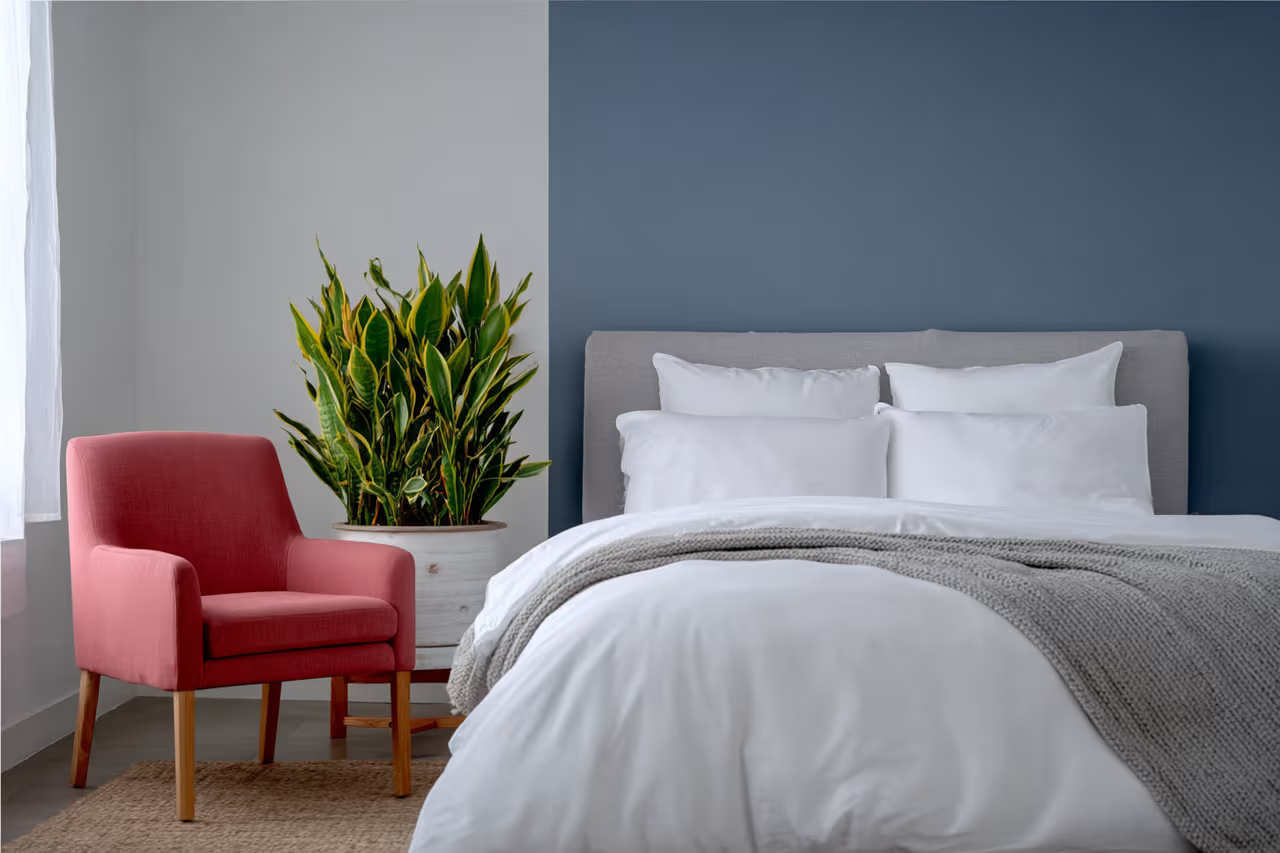
Sleep architecture refers to the basic structural organization of normal sleep, which consists of cyclical patterns of non-rapid eye movement (NREM) and rapid eye movement (REM) sleep. These complex cycles are fundamentally crucial for physical restoration, cognitive processing, and emotional regulation. However, achieving this intricate balance is heavily dependent on your immediate physical environment, particularly the dimensions of your sleeping surface.
A cramped sleeping space can unknowingly sabotage your sleep architecture, preventing your body from progressing smoothly through these vital restorative stages. When we feel physically restricted, our muscles remain subtly tense, and our nervous system stays on high alert, guarding against the edge of the bed or a partner’s movements. This persistent low-level stress severely fragments sleep continuity, leading to frequent micro-awakenings that you might not even remember the next morning.
Understanding the profound correlation between spatial freedom and deep sleep is the first step toward optimizing your bedroom environment for better health. By recognizing how physical constraints hinder your body’s natural nocturnal rhythms, you can make informed decisions about your bedding that will ultimately transform your nightly rest into a deeply rejuvenating experience, safeguarding your overall well-being. Investing in a properly sized sleeping environment is not merely a matter of luxury; it is a vital component of long-term health maintenance and daily vitality.
When considering a bedroom upgrade, addressing the primary sleeping surface is paramount for both single individuals and couples. A standard double bed often fails to provide the necessary personal space required to prevent sleep disturbances, leaving adults with a sleeping width equivalent to that of a baby in a crib. This lack of space forces sleepers into unnatural, constrained postures that restrict blood flow and create painful pressure points over time.
To combat these issues, upgrading to a premium king size mattress offers a scientifically sound solution. The expansive dimensions drastically reduce the likelihood of physical collisions with a partner and provide the physical freedom necessary to naturally shift positions throughout the night. This unhindered movement allows the body to easily transition between different sleep stages without the disruptive jolts associated with navigating a cramped, restrictive sleeping surface.
The Biomechanics of Sleep and Spatial Requirements
The biomechanics of a resting human body dictate a significant need for space to achieve muscular relaxation. Throughout an average night, a healthy adult will naturally change positions between ten and twenty times to relieve pressure on joints and facilitate proper circulation. In a restrictive bed, this natural instinct is constantly thwarted by physical boundaries.
You might unconsciously pull your limbs in tightly to avoid falling out of bed, sustaining muscle tension that directly conflicts with the deep relaxation required for NREM sleep. Upgrading your bed dimensions completely removes these physical barriers. A larger surface area allows your limbs to spread out naturally, distributing your body weight more evenly across the mattress. This optimal weight distribution prevents the formation of painful pressure points on the hips and shoulders, ensuring your circulatory system functions efficiently and your muscles can fully disengage.
Mitigating Motion Transfer for Uninterrupted Rest
For those who share a bed, motion transfer is frequently the leading cause of poor sleep architecture. Every time a partner tosses, turns, or gets up, the resulting kinetic energy ripples across a smaller mattress, causing immediate physical disruption. These tactile interruptions frequently pull the brain out of deep, restorative NREM or REM sleep and back into lighter, easily disturbed sleep stages.
Expanding your sleep surface inherently mitigates this pervasive issue. The increased distance between sleepers on a larger mattress creates a vital spatial buffer that effectively dissipates kinetic energy before it reaches the other person. Furthermore, modern larger mattresses often utilize advanced pocket spring systems or high-density foams that isolate movement locally. This combination of increased surface area and responsive support technology ensures that a partner’s restlessness does not hijack your sleep cycle, preserving the delicate continuity of your rest.
Temperature Regulation and Sleep Microclimates
Another critical component of healthy sleep architecture is the body’s ability to effectively regulate its core temperature. To initiate and maintain deep sleep, your internal temperature must drop slightly. In a cramped sleeping environment, especially when shared with a partner, ambient body heat becomes trapped, creating an uncomfortably warm microclimate. This thermal build-up acts as a powerful stimulant to the nervous system, prompting the body to wake up and cool down by shedding layers or shifting positions.
Upgrading to a larger bed significantly increases the surface area available for heat dissipation. The extra space prevents the overlapping of body heat between partners and facilitates superior air circulation throughout the bedding materials. By naturally maintaining a cooler, more stable sleep environment, a wider mattress actively supports the physiological temperature drops required for long, uninterrupted cycles of deep, restorative sleep.
Final Thoughts
Optimizing your sleep architecture is essential for waking up feeling genuinely refreshed and cognitively sharp. The dimensions of your bedroom furniture play an unexpectedly critical role in facilitating these complex, restorative biological processes. When you eliminate spatial constraints, you actively remove major physical and thermal catalysts for sleep disruption.
Upgrading to a larger bed is far more than a cosmetic room enhancement; it is a direct, tangible investment in your physical recovery and mental resilience. By choosing a spacious surface that supports unrestricted movement, minimizes partner disturbance, and promotes optimal thermoregulation, you are effectively setting the stage for superior sleep continuity. This strategic upgrade transforms an ordinary bedroom into a dedicated sanctuary for health, ensuring that your body can seamlessly navigate its natural sleep cycles and recover efficiently from the physical and mental demands of daily life.
Frequently Asked Questions (FAQs)
1. How does a larger bed specifically improve sleep architecture?
A larger bed prevents physical constraints that cause micro-awakenings. By providing enough room to stretch out comfortably, it stops you from waking up due to hitting the edge of the bed or a partner. This uninterrupted physical state allows your brain to seamlessly cycle through light, deep, and REM sleep stages without being prematurely jolted awake.
2. Will upgrading my mattress size help with my chronic back pain?
It can certainly help. A larger surface area allows you to find the most biomechanically neutral sleeping posture without hanging off the edge or contorting your spine to fit a small space. This freedom of movement promotes healthier spinal alignment and reduces sustained muscle tension, which are major contributors to nocturnal back pain.
3. Does a bigger mattress really make a difference for temperature control?
Yes, spatial dynamics heavily influence thermoregulation. A larger mattress provides more distance between partners, preventing body heat from becoming trapped in a concentrated area. The increased surface area also allows bedding materials to breathe more efficiently, helping to dissipate excess heat and maintain the slightly cooler core temperature required for deep NREM sleep.
4. How does bed size affect motion transfer between partners?
Smaller beds force partners to sleep in close proximity, meaning kinetic energy from every movement travels easily across the surface. A larger bed provides a crucial spatial buffer. Combined with modern internal support systems, the extra width helps isolate and absorb motion locally, meaning one partner’s restlessness is far less likely to disturb the other.
5. Is upgrading bed size beneficial even if I sleep alone?
Absolutely. Single sleepers naturally shift positions 10 to 20 times a night. A restrictive bed can cause anxiety about rolling out, leading to tense muscles. A wider bed provides complete postural freedom, allowing solo sleepers to spread out fully and utilize the entire surface, leading to deeper muscle relaxation and fewer sleep interruptions.

Design Styles That Work Well with WPC Decking

Expert SSD Data Recovery Services for Failed Drives: Fast & Reliable Solutions

North Dakota Community Grants: Investing in Rural Strength and Local Growth

How St. Louis Personal Injury Attorneys Help Accident Victims Protect Their Rights

What the First 5 Years of Retirement Can Teach You About Long-Term Wealth

The Rise of Conversational Messaging in Modern Business

5 Million-Dollar Mistakes Families Make During Probate

Tattoo Training: Your Guide to Becoming a Professional Tattoo Artist in Australia

Microblading Eyebrows: Everything You Need to Know

4 Benefits of Professional Industrial and Commercial Cleaning Services

MacBook Air Computer Charger: Features, Performance, and Computer Charger MacBook Compatibility Guide

Skills Every Digital Entrepreneur Should Develop

TikTok Gift Cards, Explained: What They Do and Why People Buy Them

Turning Long Content Into Actionable Insights Faster

Why Wedding Dress Preservation Fails: The Science Behind Professional Cleaning vs. Home Storage

The Hidden Costs of Ignoring an Electrical Emergency at Home

Why Kitchen Spraying Is the Smart Choice for Your Modern Homes

How AI Scribe Technology is Revolutionizing EHR Documentation

Tips to Successfully Master Online Cloud Computing Courses in 2026

Why Investors Monitor Future Property Auction Listings
Design Styles That Work Well with WPC Decking
Expert SSD Data Recovery Services for Failed Drives: Fast & Reliable Solutions
North Dakota Community Grants: Investing in Rural Strength and Local Growth
How St. Louis Personal Injury Attorneys Help Accident Victims Protect Their Rights
What the First 5 Years of Retirement Can Teach You About Long-Term Wealth
The Rise of Conversational Messaging in Modern Business
5 Million-Dollar Mistakes Families Make During Probate
Tattoo Training: Your Guide to Becoming a Professional Tattoo Artist in Australia
Microblading Eyebrows: Everything You Need to Know
4 Benefits of Professional Industrial and Commercial Cleaning Services
-

 Biography5 months ago
The Emotional Journey of Joanne Schieble Simpson, Steve Jobs’ Biological Mother
-

 News4 months ago
Jamal Adeen Thomas – Everything You Should Know About Clarence Thomas’ Son
-

 Blog2 months ago
What Is Sotwe? Everything You Need to Know Before Using It
-

 Biography5 months ago
Meet Theo Ressler: Everything You Know About Jami Gertz’s son