Connect with us

Tech

Yorkie Skin Sensitivities: Choosing a Shampoo That Won’t Irritate

Published

on

The bath itself goes fine. It’s twenty minutes later, when your Yorkie starts dragging her belly across the carpet, gnawing at one front paw, and rubbing her face along the couch cushions like she’s trying to sand it off, that you realize something in that bottle didn’t agree with her. By morning there’s a pink flush under the armpits and a dusting of flakes at the base of her tail. I hear a version of this story from Yorkie owners constantly. The shampoo was marketed as “gentle.” It wasn’t, at least not for this dog.

The good news: Yorkie skin trouble is rarely mysterious. It’s usually a mismatch between a thin-skinned, single-coated little dog and a product built for a tougher customer. Fix the product and the routine, and most of the scratching goes with it.

The Short Answer

  • Choose a fragrance-free, dog-specific shampoo built for sensitive skin, ideally with colloidal oatmeal, aloe, or glycerin.
  • Skip artificial fragrance, sulfates, dyes, and drying alcohols, which are the four most common triggers.
  • Patch-test every new product on a coin-sized spot of belly skin and wait 24 hours before a full bath.
  • Bathe every 3–4 weeks in lukewarm water, and rinse for longer than feels necessary. Residue itches.
  • Call the vet if skin is raw, weeping, smelly, or the itching outlasts a shampoo change by more than two weeks.

Why Yorkie Skin Is So Easy to Upset

A Yorkshire Terrier’s coat is famously fine, silky, and closer in texture to human hair than to the dense double coat of a Lab or a husky. That silkiness is lovely to brush. It’s also a terrible bodyguard. A single-layer coat means whatever you pour on the dog reaches the skin almost immediately, with no woolly undercoat to dilute it, so a marginal irritant that a forty-pound mutt would shrug off can light up a seven-pound Yorkie from nose to tail.

There’s a second layer to the problem. Yorkies are among the breeds prone to atopy, the inhalant and environmental allergy that shows up as itchy paws, faces, armpits, and ears rather than sneezing. Atopic dogs usually start showing signs between one and three years of age, often seasonally at first, and their skin barrier is already compromised before you ever run the tap. A harsh shampoo on top of an allergic flare isn’t the cause of the misery, but it’s the match on the kindling. If your Yorkie licks her feet year-round or her ears flare every spring, that’s a vet conversation; no shampoo treats atopy on its own.

Label Reading: What to Put Back on the Shelf

You don’t need a chemistry degree. You need to recognize five repeat offenders, in roughly this order of importance:

  • Artificial fragrance, “parfum,” or “masking fragrance.” The single most common trigger. That warm-cookie or fresh-linen scent can hide dozens of undisclosed compounds. If your dog smells like a candle store after a bath, this is the first suspect.
  • Sodium lauryl sulfate and other harsh sulfates. Great at cutting grease, which is exactly the problem: they strip the natural oils a thin coat can’t spare.
  • Alcohol near the top of the ingredient list. A fast track to flaky, tight, dandruffy skin.
  • Artificial dyes. A blue shampoo does not clean better than a beige one. The color is for you, and your Yorkie pays for it.
  • Parabens and certain preservatives, occasional sensitizers worth avoiding once a dog has already shown reactive skin.

One trap worth naming: “unscented” is not the same as “fragrance-free.” Unscented products sometimes just contain a masking fragrance to hide the base smell. Look for the words “fragrance-free” specifically. And a short, pronounceable ingredient list is generally a better bet than one that reads like a science-fair project.

What Actually Works on Sensitive Skin

For a reactive Yorkie, start with a fragrance-free formula built for sensitive skin. Colloidal oatmeal is the workhorse, with a well-earned record for calming itchy, dry skin. Aloe, glycerin, and ceramides are good supporting players; they help skin hold moisture instead of shedding it. “Hypoallergenic” is a reasonable signal but not a regulated one, so read the ingredients anyway.

Two non-negotiables. First, use a dog-specific product, always. Human shampoo, including the baby stuff, is built for human skin and reliably leaves dogs drier and itchier than it found them. Second, if your vet has prescribed a medicated shampoo for yeast, bacteria, or seborrhea, that’s a treatment with its own schedule and contact time, not routine grooming.

If you’d rather compare gentle formulas side by side before spending money, this roundup of yorkie shampoo recommendations lays out how the fragrance-free and oatmeal options stack up, which beats running the experiment on your own dog’s skin.

Patch-Test First. Every Time.

Even a genuinely gentle shampoo can bother one particular dog. The five-minute insurance policy: dilute a drop of the new shampoo, work it into a coin-sized spot on the inner thigh or belly where the coat is thin, let it sit about ten minutes, rinse thoroughly, and then wait a full day. Calm skin the next morning means you’re clear. A pink patch means you just saved yourself a whole-body reaction. Owners skip this step because the bottle says “sensitive.” The bottle has never met your dog.

The Bath Itself, Done Right

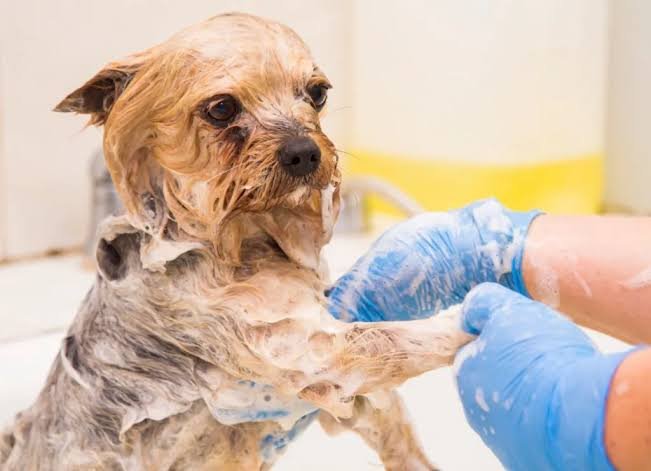
Half of “shampoo reactions” are actually technique problems. The sequence that keeps sensitive skin calm:

  • Brush before the water starts. Wet mats tighten into felt on a silky coat, and matted skin underneath stays damp and irritated.
  • Use lukewarm water, comfortable on the inside of your wrist, the same test you’d use for a baby’s bottle. Hot water strips oils and inflames already-touchy skin.
  • Dilute the shampoo in a cup of water before applying. It spreads further through fine hair and rinses out faster.
  • Lather gently for a few minutes, avoiding eyes and the inside of the ears.
  • Rinse twice as long as you think you need to. Leftover residue is one of the most common causes of post-bath itching, and it hides brilliantly in a Yorkie’s fine coat. When you’re sure it’s all out, rinse once more.
  • Dry thoroughly with a towel and, if your dog tolerates it, a dryer on its lowest heat setting held well back. A damp Yorkie left to air-dry is a yeast infection filling out paperwork.

How Often Is Often Enough?

Over-bathing is the quiet villain in a lot of Yorkie skin stories. Every wash removes some natural oil, so a dog bathed weekly with even a mild shampoo can end up flaky and itchy from sheer enthusiasm. For most healthy Yorkies, every three to four weeks is the sweet spot, stretched or shortened by how grubby life actually gets. Between baths, a damp cloth or a plain grooming wipe handles muddy paws. Daily brushing does more for that coat than extra baths ever will.

FAQ

Why does my Yorkie itch right after a bath?

The usual culprits, in order: shampoo residue from a rushed rinse, water that was too hot, or a fragrance or sulfate in the formula. Rinse longer and cooler at the next bath, and switch to a fragrance-free product. If itching starts within a day or two of trying a new shampoo, that product is suspect until proven otherwise.

Can I use baby shampoo on my Yorkie?

No, and this one surprises people. Baby shampoo is mild for human skin, but dog skin sits at a different pH, so even gentle human formulas dry it out and weaken the barrier. A dog-specific sensitive-skin shampoo is the right tool.

When is itching a vet problem instead of a shampoo problem?

If the skin is raw, weeping, scabbed, or smells yeasty; if your dog chews herself awake at night; or if the itching continues more than two weeks after you’ve switched products and dialed back bathing, book the appointment. Fleas, food allergies, atopy, and skin infections all itch, and no shampoo fixes any of them.

The Bottom Line

Pick one fragrance-free, oatmeal-based, dog-specific shampoo. Patch-test it, bathe in lukewarm water every three to four weeks, and rinse like you mean it. If the scratching persists anyway, stop shopping and call your vet, because at that point the problem isn’t in the bottle. For most Yorkies, calm skin comes from doing less, gently, and doing it the same way every time.

Continue Reading

Trending