Educational institutions increasingly prioritize agility as they navigate changing demographics and evolving pedagogical methods. The rigid structures of the past are giving way to more fluid, responsive environments that support modern curriculum needs. This shift allows administrators to manage their facilities with greater foresight and less long-term commitment to static spaces.
Evolution from outdated portables to modern learning environments
The perception of temporary instruction spaces has moved past the old image of cramped, detached trailers. Today, these facilities incorporate natural light, high-quality finishes, and sophisticated connectivity to create learning zones that mirror the experience of permanent buildings. Educators today demand spaces where students feel engaged and supported, regardless of whether a structure is labeled as modular or permanent.
Prioritizing student well-being through flexible design
Environmental comfort remains central to student performance and focus during the academic year. By utilizing modern engineering, these designs prioritize optimal acoustic insulation and climate control to ensure that students can learn without distraction. A well-designed environment nurtures curiosity and stability, proving that modular options can offer the same level of comfort as traditional classrooms.
Strategic benefits of modular versatility in district planning
Districts are discovering that building for flexibility enables smarter resource allocation across their portfolios. By choosing adaptable structures, leadership teams can pivot quickly when community needs shift. This forward-thinking mindset ensures that infrastructure keeps pace with educational requirements rather than lag behind them.
Cost-effectiveness of modular and temporary school buildings
Choosing temporary school buildings often provides a fiscally responsible pathway for districts facing limited capital improvement budgets. By assessing the full lifecycle of a facility, schools find that modern modular units align well with both current budgets and long-term financial stability. It is often a balanced approach for those needing quick results without exhausting local funding.
Comparing initial capital investment versus permanent construction
Traditional building projects frequently encounter budget creep and lengthy procurement cycles that strain public funding. In contrast, modular construction provides a more predictable cost structure by keeping most site work contained within a controlled factory setting. For example, BOXX Modular offers solutions that integrate seamlessly into existing school sites, helping districts avoid the higher overhead of conventional architectural projects.
Reducing long-term maintenance and operational overhead
| Feature |
Conventional Build |
Modern Modular |
| Planning Phase |
Extensive |
Streamlined |
| Energy Efficiency |
Variable |
High Baseline |
| Relocation Option |
Impossible |
Possible |
Districts that move toward standardized modular systems often notice a decrease in recurring maintenance costs due to modern HVAC and lighting technology. The data shows that investing in high-performance modular hardware significantly lowers energy consumption throughout the year. When facilities are easier to manage and less costly to repair, administrators can redirect savings into student programs.
Funding options: leasing versus purchasing temporary structures
Flexible financial models allow schools to acquire infrastructure through either capital expenditure or operating budget leasing. Leasing enables districts to treat building capacity as a variable expense, which is particularly beneficial during phases of unpredictable enrollment. Whether a district chooses to purchase outright or secure a lease, the goal remains minimizing risk while meeting immediate student needs.
Speed and efficiency in construction timelines
Efficiency in modern project delivery stems from the ability to overlap site development with facility manufacturing. This approach removes the typical delays associated with weather or logistical challenges on the school campus. By maintaining a steady pace, schools can realize their capacity goals significantly faster than those adhering to traditional site-built methods.
Accelerated site preparation through parallel construction methods
While the ground is being prepared and utilities are run at the school, the modules themselves are concurrently produced off-site. This synchronization reduces the project duration by weeks or even months compared to standard layouts. The result is a campus that hits its targets without the typical wait times associated with foundation pouring and heavy building material transportation.
Minimizing campus disruption during the academic year
Construction activities often conflict with ongoing educational operations, necessitating careful scheduling by facility managers. Utilizing assembly-heavy construction methods allows for much of the work to take place off-campus, preventing the noise and vehicle traffic common in big builds. This focus on site sensitivity ensures that students and staff can focus on their work without interruptions from massive construction machinery.
Rapid installation phases for immediate capacity relief
When a surge in enrollment occurs, schools need a solution that is ready within weeks rather than years. Organizations like BOXX Modular specialize in the swift placement of units, providing immediate help for districts facing sudden overcrowding. The primary operational steps for rapid installation include:
- Soil testing and permit acquisition
- Prefabricated foundation setting
- Module transport and crane placement
- Utility hook-up and functional checks
These steps create a streamlined timeline that delivers relief exactly when the community needs it most.
Addressing fluctuating student population needs
Districts face challenges when local demographics shift unexpectedly due to migration or new residential developments. Relying on temporary school buildings permits these districts to scale their campus footprint appropriately to maintain class sizes that serve the student body well. This scalability keeps the focus on classroom quality rather than physical constraints.
Responding to unexpected growth without costly expansions
When a school experiences a sudden enrollment spike, traditional expansion projects might take years to secure and build. Flexible modular units serve as an immediate buffer that allows the district to accommodate all students in safe, clean environments. This agility protects the district from the financial pressure of building a permanent, costly wing that might eventually go unused.
Scalability for temporary enrollment surges
As the name implies, temporary capacity supports districts through seasonal or short-term population bubbles. By relying on relocatable options, a district can move units between various sites to ensure each campus has exactly the right number of classrooms required. This mobility is a hallmark of truly intelligent district planning strategies.
Repurposing modules for diverse learning functions
While many people see these units simply as standard classrooms, their interior layouts are often highly customizable for diverse needs. A module might function as a science lab one summer and a specialized tutoring center the next. This adaptability makes these assets valuable components of a diverse school infrastructure strategy.
Quality and durability of modern flexible structures
Quality is the foundation of any facility that intends to support long-term learning success. Modern modular manufacturers apply the same engineering rigors to these units as they would to any permanent capital project. This dedication ensures that buildings meet or exceed the requirements of codes that protect both students and teachers.
Meeting rigorous safety and building code standards
Safety is never compromised in the pursuit of efficiency or speed. Every modular unit must adhere to stringent building codes which incorporate fire safety, structural integrity, and accessibility requirements. By following these regulations, manufacturers ensure that these environments are as secure and stable as any conventional structure found on a standard school campus.
Architectural customization and exterior aesthetics
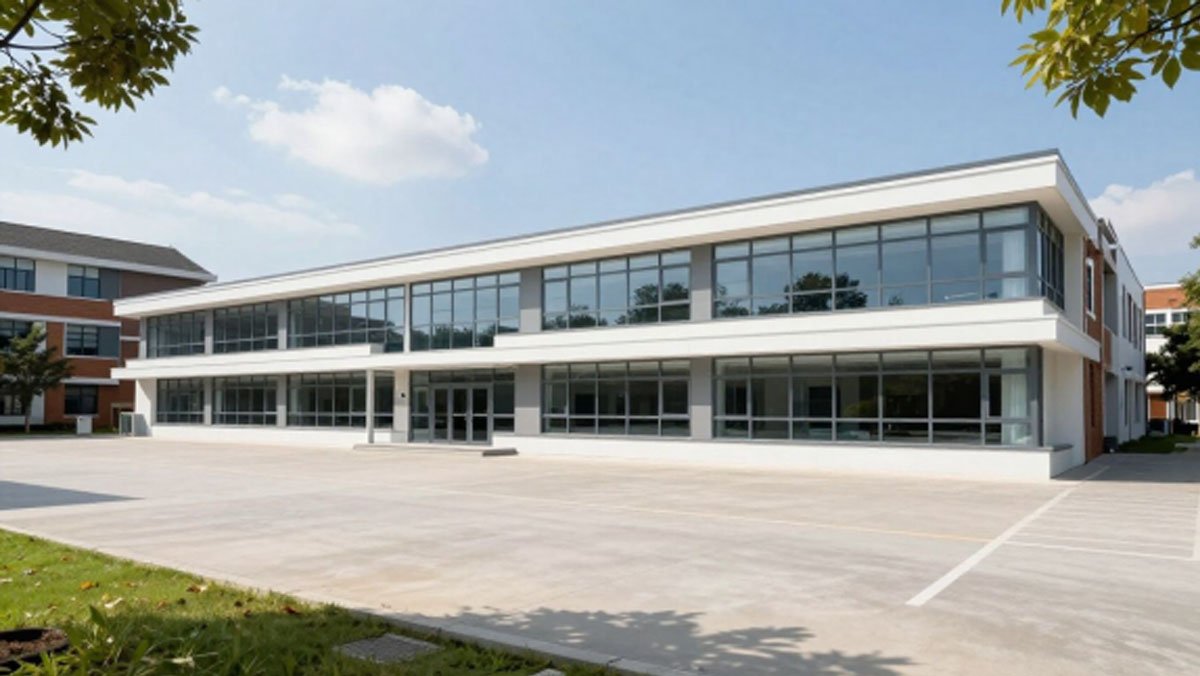
Gone are the days when all modular units looked identical to one another in their external appearance. Contemporary designs allow designers to choose finishes that harmonize with the existing school building, including brick facades, custom paint, or varied roofing lines. BOXX Modular supports these aesthetic choices, allowing districts to create a cohesive image even when using flexible technology.
Advancements in indoor air quality and temperature control
Modern ventilation systems ensure that air circulation meets or exceeds health standards for classrooms, keeping students comfortable all year long. Better insulation materials significantly improve thermal efficiency, which means the systems use less energy to maintain a perfect climate. This attention to detail demonstrates that modern, flexible structures can be exceptionally healthy places to learn.
Implementing sustainable building practices in education
Sustainability is moving beyond a buzzword to become a standard objective in educational construction projects. By minimizing waste and maximizing material utility, new building methods reflect a commitment to environmental stewardship. These practices ensure the facilities contribute to a greener future while serving current educational goals.
Low-impact site preparation and ground disturbance reduction
Because most of the construction happens in a factory, the degree of site disruption is kept to a minimum compared to traditional builds. There is less requirement for heavy excavation equipment, which preserves the natural state of the schoolyard and prevents unnecessary soil erosion. This thoughtful approach protects the local ecosystem surrounding the installation site.
Energy efficiency through advanced insulation and smart systems
New building designs emphasize thermal performance from the earliest planning stages to reduce long-term consumption. Smart systems manage heating and cooling based on real-time usage patterns, ensuring that energy is never wasted in empty classrooms. These technological investments help schools reduce their overall carbon footprint while decreasing electricity bills.
Reusability and circular lifecycle management of modules
At the end of their service life at one location, modules can be refurbished and deployed elsewhere, minimizing waste. This circular approach to construction treats building materials as valuable assets that can change roles rather than being sent to a landfill. It is a responsible lifecycle model that ensures educational dollars deliver sustained value long after the initial installation.
Conclusion
The move toward more adaptable and temporary school buildings represents a strategic choice for districts prioritizing both long-term health and short-term capacity concerns. By leveraging modular innovations that offer speed, durability, and financial efficiency, schools ensure that they can always provide excellent learning spaces that meet the genuine needs of their communities.





 Biography7 months ago
 News6 months ago
 Blog4 months ago
 Biography7 months ago