The application control engine is an important part of modern computer networks. It helps manage how applications work between users and servers. In today’s digital world, apps must be fast, stable, and always available. That is why systems like the application control engine are widely used in companies and cloud platforms.
In this article, we will clearly explain what the application control engine is, how it works, and why it is used. We will also compare it with application firewalls and show where each one fits. Everything will be explained in very simple words so anyone can understand it easily without any technical background.
What is an Application Control Engine?
The application control engine is a system that helps manage and improve how applications are delivered over a network. It is also known as part of an Application Delivery Controller. It sits between users and servers and controls how data moves. Its main job is to make applications run smoothly and faster.
The application control engine does not only send traffic. It also makes smart decisions about where the traffic should go. It checks server health, load, and performance before sending user requests. This helps prevent overload and keeps services running without interruption.
It is important to know that the application control engine is not mainly a security tool. Instead, it focuses more on performance, speed, and stability of applications. It ensures users get a better experience when using websites or online services.
In simple terms, you can think of it like a traffic manager. It guides data to the best path so everything runs smoothly. Without it, servers can get slow or overloaded during high traffic.
Why Application Control Engine is Used
The application control engine is used because modern applications handle a large amount of traffic. Websites, apps, and online services often receive thousands or even millions of requests at the same time. Without proper control, servers can crash or slow down.
One major reason for using it is to improve performance. It helps distribute traffic across multiple servers so no single server becomes too busy. This keeps the system stable and fast even during peak usage times.
Another reason is better user experience. When traffic is managed properly, users get faster loading times and fewer errors. This is very important for online shopping sites, banking apps, and streaming platforms.
It is also used to improve reliability. If one server stops working, the application control engine sends traffic to another healthy server. This ensures the service stays online without downtime.
How Application Control Engine Works
The application control engine works by sitting between the user and the backend servers. When a user sends a request, it first reaches the engine. The engine then checks where to send that request based on rules and conditions.
It looks at factors like server load, health status, and response time. Then it chooses the best server to handle the request. This helps balance the workload across all servers in the system.
It can also modify traffic if needed. For example, it can rewrite URLs or manage user sessions. It can even handle SSL encryption tasks so that backend servers do not get extra load.
A simple example is when many people open a website at the same time. The application control engine spreads all those users across different servers so the website does not slow down or crash.
Key Features of Application Control Engine
The application control engine comes with many useful features that help improve application delivery. One of the most important features is load balancing. This means it spreads traffic evenly across multiple servers to avoid overload.
Another important feature is content switching. This allows the system to send different types of traffic to different servers. For example, images may go to one server while login requests go to another server.
It also supports SSL offloading. This means it handles encryption and decryption tasks instead of the main server. This reduces the workload on application servers and improves speed.
Other features include caching, compression, and health monitoring. Caching helps store data for faster access, while compression reduces data size. Health monitoring checks if servers are working properly and removes failed servers from traffic flow.
OSI Layers in Application Control Engine
The application control engine works on both Layer 4 and Layer 7 of the OSI model. Layer 4 is the transport layer, which deals with IP addresses and ports. Layer 7 is the application layer, which deals with actual application data like HTTP requests.
By working on Layer 4, the engine can manage basic traffic flow and load balancing. This helps it decide where data should go based on network-level information.
By working on Layer 7, it can make smarter decisions based on application data. For example, it can read URLs or HTTP headers to send traffic to the right server.
Using both layers together gives better control, better performance, and smarter traffic management for modern applications.
Application Acceleration in Application Control Engine
The application control engine also helps in making applications faster through a process called acceleration. This means improving the speed at which data moves between users and servers.
One way it does this is by using caching. Caching stores frequently used data so it can be delivered quickly without going to the server every time. This reduces delay and improves speed.
It also uses compression techniques. Compression reduces the size of data before sending it to users. Smaller data means faster delivery and less network load.
These features together help websites and applications load faster. This improves user satisfaction, especially in high-traffic environments like e-commerce and media platforms.
Traffic Load Balancing in Application Control Engine
The application control engine plays a big role in load balancing. Load balancing means dividing traffic among multiple servers so that no single server gets overloaded.
When a user sends a request, the engine checks all available servers. It then selects the best one based on performance, health, and current load.
This process ensures that all servers share the work equally. It also helps prevent system crashes during high traffic situations.
Load balancing is very important for websites that get sudden traffic spikes, such as during sales or major events. It keeps everything running smoothly without downtime.
Application Control Engine vs Application Firewall
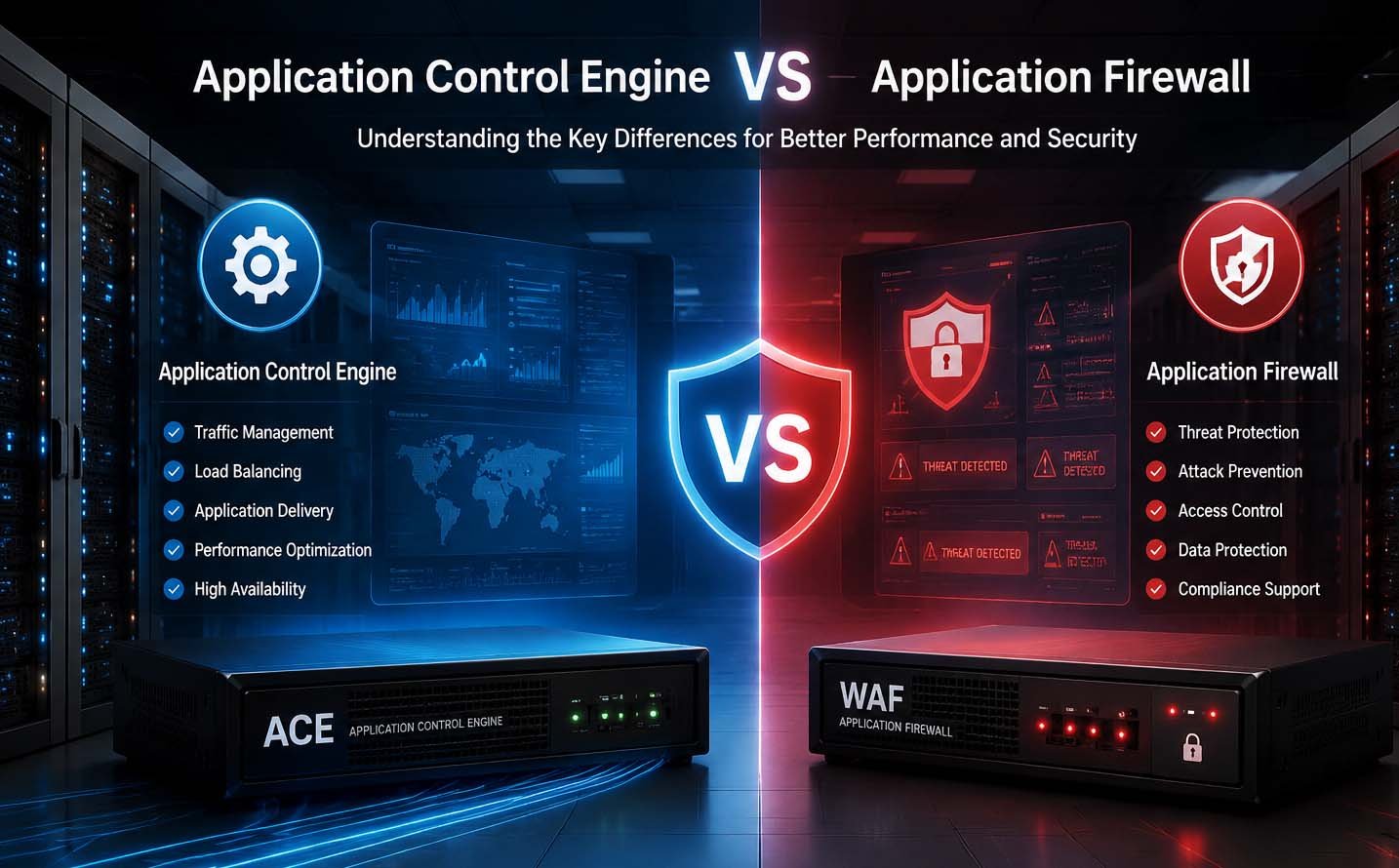
The application control engine and application firewall are both used in networks, but they have different jobs. The application control engine focuses on performance and traffic management. The application firewall focuses on security and protection.
The application control engine improves speed, load balancing, and application delivery. It ensures that users get fast and stable access to applications. It works mainly to optimize how traffic flows.
On the other hand, an application firewall protects applications from cyber threats. It checks every request for harmful activity and blocks attacks like SQL injection or XSS.
In simple words, one system makes things faster, and the other makes things safer. Both are important, but they solve different problems in modern networks.
What is an Application Firewall (WAF)
An application firewall, also known as a Web Application Firewall (WAF), is a security system that protects applications from attacks. It sits between users and applications and checks all incoming and outgoing traffic.
Its main job is to stop harmful requests before they reach the server. It looks for patterns that match known attacks and blocks them instantly.
Application firewalls are widely used in websites, banking systems, and online services where security is very important. They protect sensitive data from hackers and unwanted access.
They are a key part of modern cybersecurity because online threats are increasing every day.
Key Features of Application Firewall
The application firewall comes with strong security features. One major feature is deep inspection. It checks every request in detail to find hidden threats inside the data.
It also protects against common attacks like SQL injection, cross-site scripting, and file inclusion attacks. These are very common methods used by hackers to break into systems.
Another feature is real-time threat detection. This means it can detect and block attacks immediately while they are happening.
It also includes logging and monitoring tools. These tools help security teams track activity and respond to threats quickly.
Application Control Engine vs Application Firewall Explained
The application control engine and application firewall are often used together in modern networks. Both work in different ways, but they support the same goal of keeping applications fast, stable, and safe. The application control engine focuses more on speed and traffic flow, while the firewall focuses on protection from online attacks.
In simple words, the application control engine makes apps work better and faster. The application firewall makes apps more secure and safe from hackers. Many companies use both systems together to get the best results for performance and security.
Detailed Comparison Between Application Control Engine and Firewall
The application control engine mainly handles how data moves between users and servers. It checks traffic, balances load, and sends requests to the best server. Its job is to keep everything smooth, fast, and stable even when traffic is very high.
The application firewall works differently. It checks every request for danger. It looks for attacks like SQL injection or harmful scripts. If something looks unsafe, it blocks it before it reaches the server.
So the main difference is simple. One system manages speed and traffic. The other system manages safety and protection.
Both are important because modern websites need both fast performance and strong security at the same time.
When to Use Application Control Engine
The application control engine is used when performance is very important. It is helpful for websites and apps that get a lot of traffic. It makes sure servers do not get overloaded and everything runs smoothly.
It is also used when companies want better user experience. For example, online shopping sites need fast loading pages. The application control engine helps by sending users to the fastest available server.
It is also useful when businesses want to improve system stability. If one server fails, it automatically sends traffic to another working server. This keeps the service online without interruption.
In simple words, it is used when speed, balance, and uptime are the main goals.
When to Use Application Firewall
The application firewall is used when security is the top priority. It is very important for websites that handle sensitive data like passwords, payments, or personal details.
It is also used when companies want to protect their systems from hackers. It blocks harmful traffic before it can reach the application. This includes attacks like XSS, SQL injection, and fake requests.
Another use is compliance. Many industries need strong security rules, and application firewalls help meet those rules easily.
In simple words, it is used when protecting data and stopping attacks is the main goal.
Using Application Control Engine and Firewall Together
In many modern systems, both the application control engine and application firewall are used together. This creates a strong system that is both fast and secure.
The application control engine first manages traffic and sends it to the best server. After that, the application firewall checks the traffic for threats. This double layer makes the system strong from both sides.
For example, in an online shopping website, the application control engine helps users browse quickly. At the same time, the firewall protects payment data from hackers. This combination improves both speed and safety.
Because of this, many companies prefer using both systems instead of choosing only one.
Modern Tools That Replace Application Control Engine
The old Cisco application control engine is no longer used today. It was discontinued, so modern systems have replaced it with better tools.
Today, companies use advanced systems like F5 BIG-IP, Citrix ADC, and cloud services like AWS and Azure load balancers. These tools offer better speed, better scaling, and easier management.
Modern systems also work in cloud environments. This makes them more flexible and suitable for today’s fast-growing internet applications.
In simple words, old systems are replaced with smarter and cloud-based solutions.
Benefits of Application Control Engine
The application control engine gives many benefits for modern networks. One of the biggest benefits is better performance. It makes applications faster and more stable for users.
Another benefit is load balancing. It shares traffic across many servers so no single server gets too busy. This helps avoid crashes during high traffic times.
It also improves reliability. If one server fails, it automatically switches traffic to another server. This keeps the system running without downtime.
Overall, it helps make systems faster, smoother, and more reliable.
Challenges of Application Control Engine
Even though the application control engine is useful, it also has some challenges. One major challenge is complexity. It is not easy to set up and needs technical knowledge.
Another challenge is cost. Some traditional systems are expensive, especially hardware-based ones. This makes it difficult for small companies.
It also needs proper integration with other tools. Without correct setup, it may not work at its full potential.
So while it is powerful, it requires skilled handling and proper planning.
Final Thoughts on Application Control Engine
The application control engine plays an important role in modern digital systems. It helps improve speed, manage traffic, and keep applications running smoothly. It is not mainly focused on security, but on performance and stability.
At the same time, application firewalls are used for protection against cyber threats. When both systems are used together, they create a strong and balanced network.
In today’s world of cloud computing and heavy online traffic, both performance and security are important. That is why understanding these systems is very useful for IT professionals and businesses.
(FAQs)
What is an application control engine in simple words?
It is a system that helps manage traffic between users and servers to make applications faster and more stable.
Is application control engine still used today?
The old Cisco version is not used anymore, but modern tools like F5 and AWS load balancers are used instead.
What is the main job of an application control engine?
Its main job is to improve performance by balancing traffic and reducing server load.
Is application control engine a security tool?
No, it is not mainly a security tool. It only provides basic protection like simple traffic control.
What is the difference between ACE and firewall?
ACE focuses on speed and traffic management, while a firewall focuses on security and blocking attacks.
Can both systems work together?
Yes, they are often used together to get both fast performance and strong security.
Why do companies need application control engines?
Because they help keep websites fast, stable, and reliable even during heavy traffic.
Don’t miss these:
Tech Giants Envision Future Beyond Smartphones
NZBGeek Explained: Is This Popular NZB Indexer Really Worth It in 2026?





 Biography7 months ago
 News6 months ago
 Blog3 months ago
 Biography7 months ago