Have you ever heard the word Fascisterne and wondered what it really means? Many people hear it in history talks or news, but they don’t fully understand it. This topic may sound heavy, but don’t worry. I will explain everything in a very simple and clear way.
The word Fascisterne is linked to Fascism. It is about a system where one leader or group has full control. In the past, this idea changed many countries and affected millions of lives in serious ways.
In this article, we will learn what Fascisterne means, where it started, and why it became so powerful. We will also look at how it spread and what people believed during that time. Everything will be explained step by step in very easy words.
By the end, you will clearly understand this topic without confusion. You will also learn why people still talk about Fascisterne today and why it is important to know about it in 2026 and beyond.
What Does Fascisterne Mean?
Let’s start with the basic meaning. The word Fascisterne comes from Danish. It simply means “the fascists” in English. It is used to describe people who support or follow fascism. These people believed in strong control and strict rules.
Fascisterne were not just random people. They were part of political groups or movements. These groups wanted to change how a country works. They believed that one strong leader should make all decisions instead of the people voting freely.
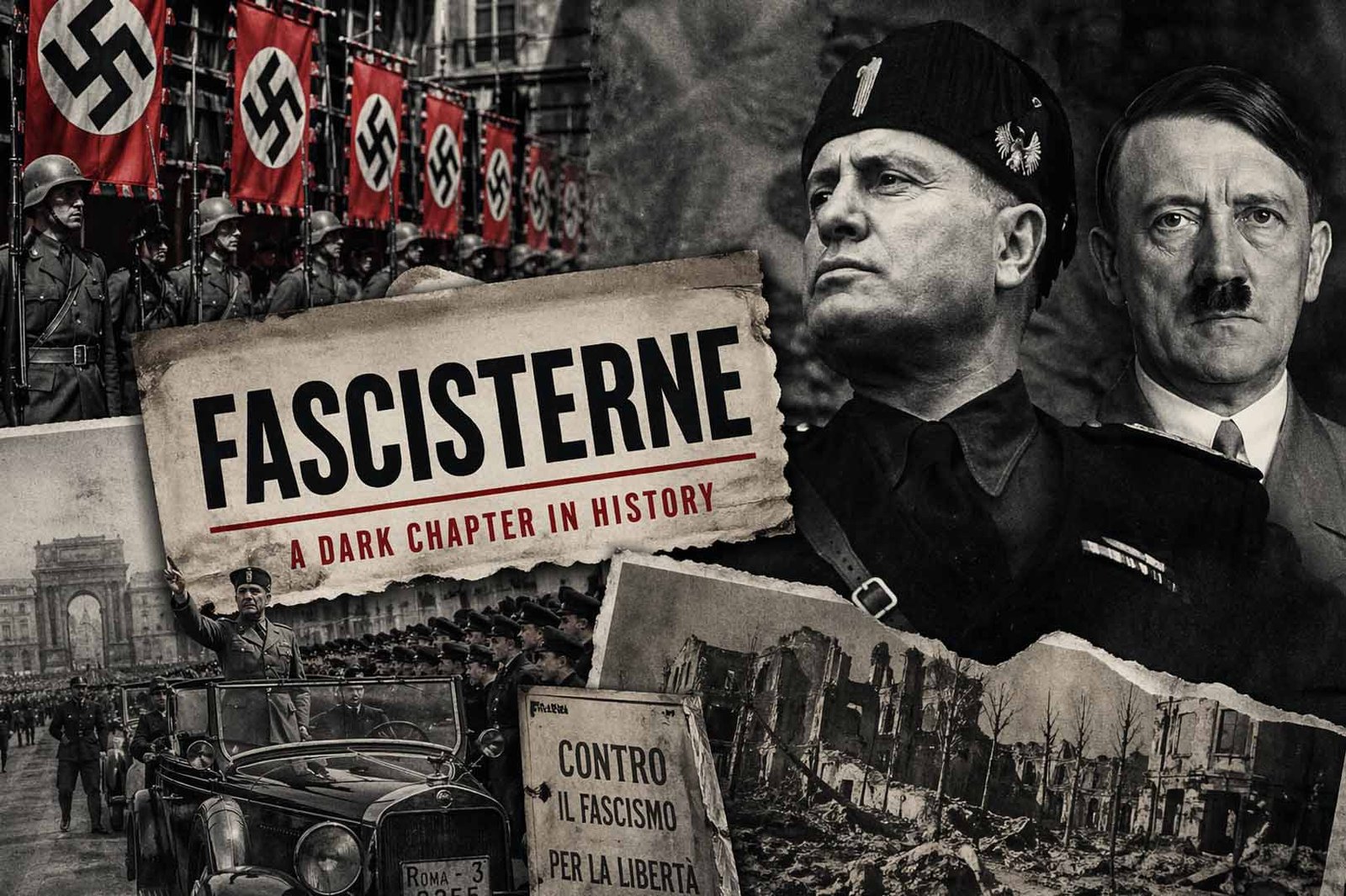
In history, Fascisterne often refers to supporters of leaders like Benito Mussolini and Adolf Hitler. These leaders created powerful governments where people had very limited freedom.
Today, the word Fascisterne is still used in discussions. But experts say we should use it carefully. It has a deep historical meaning, and it should not be used loosely in normal arguments.
Where Did Fascism Start?
To understand Fascisterne, we need to go back in time. Fascism started after World War I. Europe was in a very bad situation. Many countries were poor, broken, and full of problems.
People had no jobs. Money had little value. Families were struggling every day. Many people lost trust in their governments. They felt their leaders were weak and could not fix anything.
Because of this, people started looking for strong leaders. They wanted someone who could fix things quickly. They wanted order, safety, and pride again. This is where Fascisterne ideas started to grow.
It was not just one country. Many parts of Europe were facing the same problems. This made it easier for fascism to spread and gain support from angry and tired citizens.
Who Were the Main Leaders?
One of the most important leaders was Benito Mussolini. He started fascism in Italy. He promised to make Italy strong again. Many people believed him and supported him.
Mussolini became very powerful. He slowly removed democracy and took full control. He wanted people to follow him without question. His style of leadership became a model for others.
Another major leader was Adolf Hitler. He took fascism to a more dangerous level in Germany. He added ideas about race and created strong hate against certain groups.
There was also a thinker named Giovanni Gentile. He gave ideas that supported fascism. He believed the state is more important than the individual person.
What Did Fascisterne Believe?
Fascisterne believed that a country should have one strong leader. This leader should have full power. They thought this would make the country strong and stable.
They did not support democracy. They believed voting and debates made things slow and weak. Instead, they wanted quick decisions made by one leader or one party.
Another key belief was that the nation comes first. People were expected to put their country above their own needs. Personal freedom was not seen as important.
They also believed in unity. Everyone should think the same and follow the same path. People who disagreed were often seen as enemies.
Why Nationalism Was So Important
Nationalism was a big part of Fascisterne thinking. But this was not normal love for a country. It was extreme. People believed their country was the best and should always win.
This created an “us vs them” mindset. People started seeing others as threats. They believed outsiders or minorities could harm their country.
This idea helped leaders gain support. It made people feel united. They felt proud and strong together. But at the same time, it created division and hate.
For example, leaders would say things like, “We must protect our country from enemies.” This made people more loyal, but also more fearful and angry toward others.
The Role of Racism and Hate
Racism played a very serious role in Fascisterne movements. Some leaders believed certain groups were better than others. This idea caused a lot of harm.
In Nazi Germany, people were judged based on race. Many innocent people were treated badly just because of who they were. This led to violence and suffering.
These ideas were used to control people. Leaders created fear and blamed certain groups for problems. This made it easier to unite their supporters.
Sadly, this thinking led to terrible events like the Holocaust. It shows how dangerous hate-based ideas can be when they are given power.
How They Controlled People
Fascisterne leaders knew how to control people very well. One of their main tools was propaganda. This means controlling information to influence people’s thinking.
They controlled newspapers, radio, and schools. People only heard what the government wanted them to hear. This made it hard to know the truth.
They also used fear. Secret police watched people closely. If someone spoke against the government, they could be punished or even jailed.
Over time, people became afraid to speak freely. This created a society where everyone followed the rules, even if they did not agree.
How Fascism Spread Across Countries
After starting in Italy, the ideas of Fascisterne did not stay in one place. They slowly moved to other countries. Many nations were facing the same problems like poverty, fear, and weak governments, so these ideas found support easily.
In Germany, fascism grew very fast under Adolf Hitler. His system was called Nazism. It was similar to fascism but also included strong racial ideas. Many people followed him because they wanted change and strength.
In Spain, a leader named Francisco Franco took control. His rule was also strict and authoritarian. Other countries in Europe also saw small fascist groups that followed similar ideas.
Even in places like Denmark, there were small groups linked to Fascisterne during World War II. They were not very powerful, but they show how far these ideas had spread across Europe at that time.
Fascisterne and World War II
The ideas of Fascisterne played a big role in starting World War II. Leaders wanted more land and power. They believed their countries should grow and become stronger than others.
Germany and Italy started taking control of other countries. This created tension and fear. Soon, many nations were pulled into war. The result was one of the most deadly wars in human history.
Millions of people lost their lives. Cities were destroyed. Families were broken. It was a time of great pain and loss across the world.
One of the worst events during this time was the Holocaust. Many innocent people were targeted and killed. This shows how dangerous Fascisterne ideas became when they were taken to extremes.
What Happened After the War?
In 1945, World War II ended. The fascist leaders lost their power. Governments led by people like Benito Mussolini and Adolf Hitler came to an end.
After the war, countries wanted peace. They worked to rebuild their systems. Many nations returned to democracy where people could vote and have freedom again.
The world also created global groups like the United Nations. These groups were made to stop future wars and protect human rights.
From that time, Fascisterne became a warning word. It reminds people of what can happen when power is misused.
Does Fascisterne Still Exist Today?
Today, we do not see the same large fascist governments like before. But some ideas connected to Fascisterne can still be seen in different parts of the world.
Some leaders still use strong nationalist messages. They talk about making their country the best and sometimes blame others for problems. This can sound similar to past ideas.
Social media has also made it easier for such ideas to spread. People can share strong opinions quickly. Sometimes, wrong or harmful ideas spread without control.
This is why people still talk about Fascisterne today. Not because it is the same as before, but because some patterns look similar and need attention.
Warning Signs to Watch Today
History teaches us many lessons. There are some signs that may show the rise of dangerous ideas like Fascisterne again.
For example, if a leader tries to take too much power, it can be a warning. If people are not allowed to speak freely, that is also a sign to be careful.
Another sign is when media is controlled. If only one side of the story is shown, people cannot think freely. This can slowly change how people see the truth.
Hate against certain groups is also a big warning. When people are divided into “us” and “them,” it can lead to serious problems over time.
Why Learning About Fascisterne Is Important
Learning about Fascisterne helps us understand history better. It shows how powerful ideas can change the world in both good and bad ways.
It also helps protect democracy. When people know the past, they can see warning signs early. This helps them make better choices for the future.
It teaches us about human rights. It reminds us that every person deserves respect and freedom, no matter who they are.
Most importantly, it helps us stay aware. Knowledge gives people the power to build a better and safer world.
Final Thoughts
Fascisterne is not just a word from history. It represents a time when power was used in dangerous ways. It shows how strong ideas can shape the world, both positively and negatively.
By learning about Fascisterne, we understand the value of freedom and fairness. We also learn how important it is to question power and protect rights.
In 2026 and beyond, this topic still matters. It reminds us to stay aware, stay informed, and build a world where everyone is treated with respect and equality.
(FAQs)
What does Fascisterne mean?
Fascisterne means “the fascists.” It refers to people who support fascism, a system where one leader has strong control, and people have limited freedom.
When did Fascisterne first appear?
Fascisterne first appeared after World War I in Europe. It started in Italy and later spread to other countries like Germany and Spain.
Who were the main leaders of Fascisterne?
The main leaders were Benito Mussolini in Italy and Adolf Hitler in Germany.
What are the main ideas of Fascisterne?
The main ideas include strong leadership, extreme nationalism, control over society, and no support for democracy or free speech.
Does Fascisterne still exist today?
Not in the same way as before, but some ideas can still be seen in modern politics, especially in strong nationalist movements.
Why is Fascisterne important to study?
It is important because it teaches us about past mistakes and helps us protect freedom, equality, and democracy today.
Don’t miss these:
Çbiri Meaning Made Easy: History, Uses, and Why It Matters Today
Meet Michelle Goeringer The Private Woman Behind Rex Ryan’s Career





 Biography6 months ago
 News6 months ago
 Blog3 months ago
 Biography6 months ago