How Baby Chameleónovité Are Born
Most Chameleónovité lay eggs. The female usually climbs down from the tree when she is ready. Then she finds a safe place in the soil or soft leaf litter. After that, she digs a small hole and lays her eggs inside it.
The number of eggs can be different from one species to another. Some chameleons lay only a few eggs. Others may lay many more. In some larger species, one clutch can have dozens of eggs, and in some cases it may be over 50.
After the female lays the eggs, she covers the hole and leaves. Chameleónovité do not care for their babies like birds or mammals do. The eggs stay hidden in the ground until they are ready to hatch.
The eggs may take weeks, months, or even more than a year to hatch. This depends on the species, the warmth, and the moisture in the soil. Nature decides the right timing, and the young chameleons come out when conditions are better.
Some Chameleónovité do not lay eggs. A few species, mostly in cooler mountain areas, give birth to live young. This can help protect the babies from cold places where eggs may not stay safe enough in the ground.
Baby Chameleónovité Start Life Alone
Baby Chameleónovité are tiny, but they are not helpless. When they hatch or are born, they already know how to climb, hide, and hunt small insects. They do not wait for a parent to feed them.
This may sound hard, but it is normal for many reptiles. A baby chameleon must find food, avoid danger, and stay hidden from the first day. Its small size helps it hide among leaves, twigs, and tiny plants.
Many baby chameleons do not survive to become adults. Birds, snakes, bigger lizards, and other animals may eat them. Weather, lack of food, and habitat problems can also make life hard for them.
This is one reason many egg-laying species lay more than one egg. Nature gives them a better chance by allowing many babies to hatch. Still, only some will grow into strong adult chameleons.
The young ones look like small copies of adults. They may not have the same bright colors at first, but they already have the same basic tools. Their eyes, feet, tail, and tongue help them begin life right away.
Why Chameleónovité Matter in Nature
Chameleónovité are important because they help keep nature balanced. They eat many insects, such as flies, crickets, grasshoppers, and beetles. This helps control insect numbers in forests, gardens, bushes, and other green places.
If there were too many insects, plants could suffer. Some insects eat leaves, flowers, or crops. By feeding on insects, Chameleónovité quietly help protect plants and support a healthier natural space.
They are also part of the food chain. Birds, snakes, and small mammals may hunt chameleons. This means chameleons are both hunters and food for other animals. Every part of nature connects in this way.
Chameleónovité can also tell us something about the health of the environment. If their numbers drop, it may mean the habitat is changing or becoming unsafe. Scientists can study them to understand what is happening in nature.
This is why protecting Chameleónovité is not only about saving one animal family. It is also about protecting forests, insects, trees, birds, soil, and the full web of life around them.
Can Chameleónovité Be Pets?
Many people love Chameleónovité because they look beautiful and different. Their bright colors, slow walk, and strange eyes make them very interesting to watch. This is why some people want to keep chameleons as pets.
But chameleons are not easy pets. They need special care every day. They need the right heat, the right moisture, clean air, live insects, safe branches, and good lighting. Without these things, they can get sick fast.
They also need UVB light. This kind of light helps their body use calcium. Calcium is very important for strong bones and a healthy body. Without proper light and food, a chameleon may become weak.
Chameleónovité also need tall homes with many branches. Since many species love climbing, a flat cage is not enough. They need space to move up and down, hide, rest, and feel safe.
Most chameleons do not enjoy being held often. Too much touching can stress them. A stressed chameleon may stop eating, turn dark, or become weak. This is why they are usually not the best pets for beginners.
What Chameleónovité Need in Care
A pet chameleon needs a home that feels close to nature. It should have branches, plants, hiding spots, and good airflow. The space should be tall because chameleons feel safer when they can climb above the ground.
Temperature is very important. Chameleónovité need warmth, but they also need cooler spots. This lets them move around and choose what feels right. In nature, they do this by moving between sun and shade.
Moisture is also important. Many chameleons drink water from leaves, not from a bowl. Owners often need to mist the leaves or use a drip system. This helps the chameleon drink in a natural way.
Food must also be handled with care. Chameleons need live insects, and these insects should be healthy too. Many owners dust insects with calcium and vitamins so the chameleon gets the right food support.
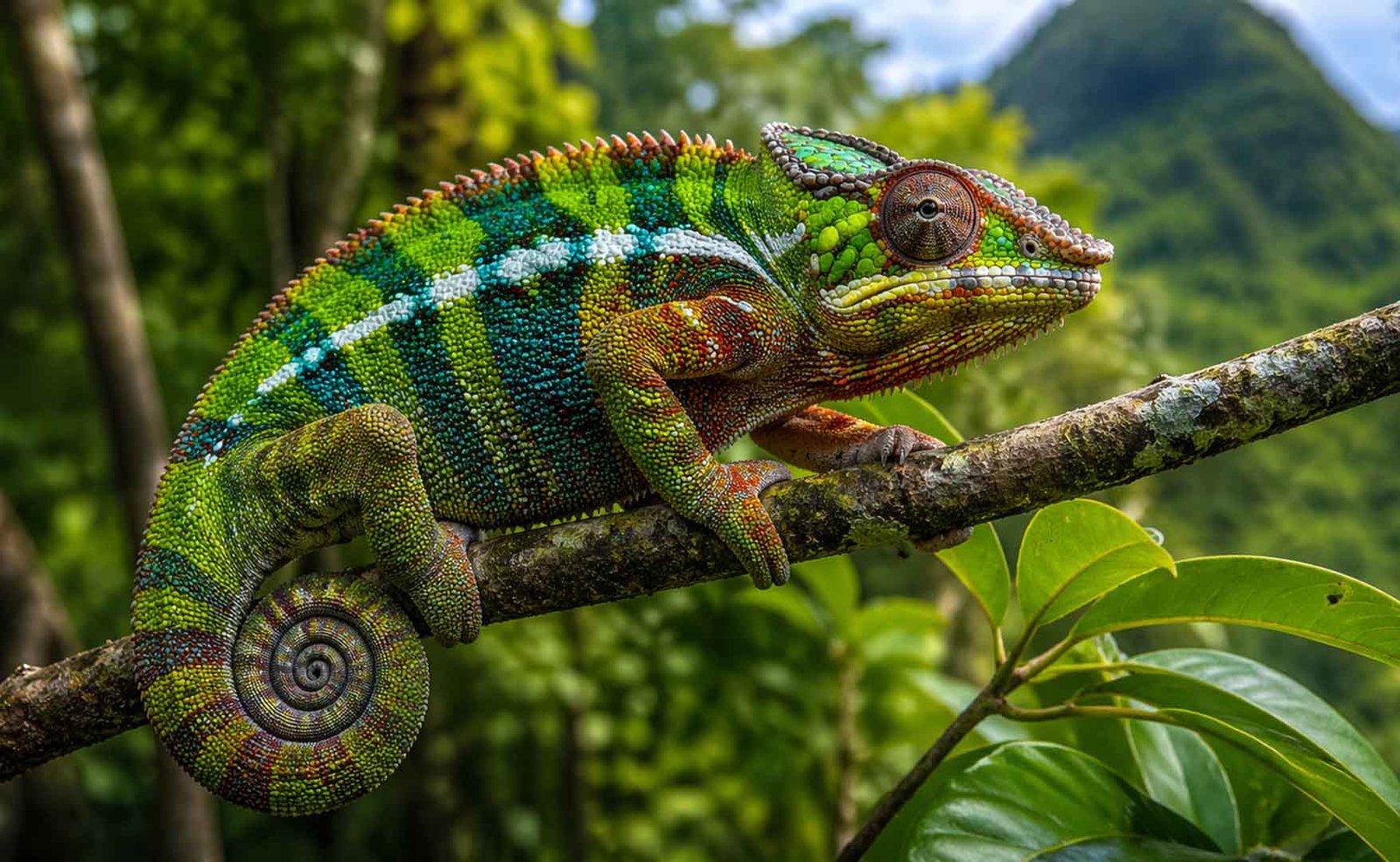
Anyone who wants a chameleon should learn about the exact species first. A veiled chameleon may have different needs from a panther chameleon or a small leaf chameleon. Each species should be cared for in the right way.
Problems Chameleónovité Face Today
Even though Chameleónovité are good at surviving in the wild, they face many problems today. The biggest problem is habitat loss. When forests are cut down, chameleons lose the trees, bushes, and plants they need.
This is a serious issue in Madagascar. Many chameleon species there live in small areas. If those forests are damaged, the species may have nowhere else to go. This makes some of them very easy to lose.
Farming, roads, towns, and wood cutting can all harm chameleon homes. When land changes too fast, Chameleónovité may not find enough food, safe branches, or good places to lay eggs.
Climate change is another problem. Chameleons depend on the right heat, rain, and moisture. If the weather becomes too hot, too dry, or too strange, some species may struggle to survive.
Illegal wildlife trade also hurts them. Some Chameleónovité are taken from the wild and sold as pets. This can lower wild numbers and harm local populations, especially when rare species are taken.
How We Can Help Protect Chameleónovité
The best way to help Chameleónovité is to protect their natural homes. Forests, bushes, and wild spaces must be kept safe. When their habitats are healthy, chameleons have food, shelter, and safe places to breed.
People can also help by learning before buying exotic pets. It is better to choose captive-bred chameleons from responsible sources instead of wild-caught ones. This can reduce pressure on wild populations.
Conservation groups also play a big role. They work to protect habitats, study species, and teach local communities. This kind of work helps people understand why these reptiles matter.
Laws and trade rules are also important. Some chameleon species need protection from over-collection. When rules are followed, fewer animals are taken from the wild in harmful ways.
Small choices matter too. Sharing correct information, supporting wildlife protection, and respecting wild animals can help. Chameleónovité may be quiet animals, but they need strong human care to keep their world safe.
Chameleónovité in Stories and Culture
Chameleónovité are not only interesting to scientists. They are also famous in stories, art, and modern media. Many people see them as signs of change because they can shift color and blend into their world.
They are often linked with patience. A chameleon can sit still for a long time and wait for the right moment. This makes it a strong symbol of calm thinking and quiet strength.
Some people also see chameleons as symbols of hidden identity. Since they can change their look, they are often used in stories to show mystery, change, or the ability to fit into different places.
But real Chameleónovité are not trying to be mysterious. They are simply using their natural tools to live. Their color change, slow walk, and watchful eyes are all part of their survival.
This mix of real science and cultural meaning makes chameleons very special. They are beautiful to look at, fun to learn about, and full of lessons about nature.
Fun Facts About Chameleónovité
One fun fact about Chameleónovité is that their eyes can look in two directions at once. This helps them watch for food and danger at the same time. It is like having two tiny cameras on their head.
Another amazing fact is that their tongue can move very fast. A chameleon can catch an insect in less than a second. It may look calm one moment and then strike before you even notice.
Some Chameleónovité can see ultraviolet light. Humans cannot see this light, but chameleons can. This may help them find mates, see signals, and understand their world in a way we cannot.
The smallest chameleons are very tiny. Some leaf chameleons are only a few centimeters long. One famous tiny species, Brookesia nana, is so small that it can fit on a fingertip.
Some chameleons are much bigger. Large species can grow more than half a meter long. This shows how wide the chameleon family is, from tiny forest-floor species to large tree-climbing hunters.
Common Myths About Chameleónovité
One common myth is that Chameleónovité can change into any color they want. This is not true. They cannot become every color like a cartoon. Their color range depends on their species, mood, health, and body condition.
Another myth is that they change color only to match the background. They can use color for hiding, but communication is often more important. Color can show stress, strength, fear, heat, or mating interest.
Some people think chameleons are friendly pets that like being held. This is also not true for most species. Chameleónovité are usually shy and calm. They feel safer when they are watched from a distance.
Another myth is that all chameleons live in deep rainforests. Many do, but not all. Some live in dry scrublands, mountain areas, savannas, and bushes. Their habitats can be very different.
People also think chameleons are weak because they move slowly. But their slow movement is smart. It helps them hide, save energy, and hunt without scaring away insects.
(FAQs)
What does Chameleónovité mean?
Chameleónovité means the chameleon family. The scientific name for this family is Chamaeleonidae. It includes true chameleons, which are reptiles known for color change, special eyes, long tongues, and strong climbing feet.
Where do Chameleónovité live?
Most Chameleónovité live in Africa and Madagascar. Some also live in southern Europe, the Middle East, India, Sri Lanka, and parts of Asia. They live in forests, bushes, trees, dry lands, mountains, and other warm habitats.
How long do Chameleónovité live?
Their age depends on the species. Many pet chameleons live around 3 to 7 years with good care. Some may live longer, while smaller species may live shorter lives. Wild chameleons often face more danger.
Do Chameleónovité change color only to hide?
No, they do not change color only to hide. They also change color to show mood, stress, fear, heat, strength, and mating interest. Their color is like a silent way to send messages.
Are Chameleónovité good pets?
Chameleónovité can be kept as pets, but they are not easy pets. They need special heat, moisture, UVB light, live insects, climbing space, and low stress. They are usually not good for beginners.
Do Chameleónovité have relationships like social animals?
No, most Chameleónovité are solitary. This means they like to live alone. They usually meet other chameleons during mating time or when defending space. Males may show bright colors to warn rivals.
Why are Chameleónovité trending in 2026?
Chameleónovité are still popular in 2026 because people love learning about unique animals. Their color change, fast tongue, strange eyes, and rare species make them great topics for science, nature videos, pet care, and wildlife learning.
Final Thoughts
Chameleónovité are some of the most amazing reptiles in the world. They are not just animals that change color. They have special eyes, fast tongues, gripping feet, strong tails, and smart ways to stay safe.
Their slow walk, quiet nature, and careful hunting style show how clever nature can be. They do not need to run fast or make loud sounds. They survive through patience, balance, and sharp body skills.
These chameleons also play an important role in nature. They eat insects, support the food chain, and help show when habitats are healthy or in danger. This makes them valuable parts of the natural world.
At the same time, many Chameleónovité need protection. Habitat loss, climate change, and illegal trade can harm them. If forests and wild spaces are protected, these reptiles have a better chance to live safely.
In the end, Chameleónovité remind us that even small and quiet animals can be full of wonder. When we learn about them, we also learn to respect nature more. That is what makes these color-changing chameleons so special.





 Biography6 months ago
 News6 months ago
 Blog3 months ago
 Biography6 months ago